Most fictional profiling scenes exaggerate certainty. A character notices one unusual detail, delivers a dramatic psychological explanation, and instantly understands the suspect completely. Realistic behavioral interpretation works very differently.
The most believable fictional profilers are not mind readers. They are observers. They notice environmental tension, contradictions in behavior, emotional shifts, surveillance patterns, and changes in social dynamics that other people ignore.
What makes this approach interesting is that the character rarely knows exactly what is happening. The skill comes from recognizing uncertainty early instead of pretending certainty already exists.
That distinction matters because realistic threat recognition depends less on genius deduction and more on sustained attention under pressure.
Behavioral Awareness Usually Starts With Environmental Noticing
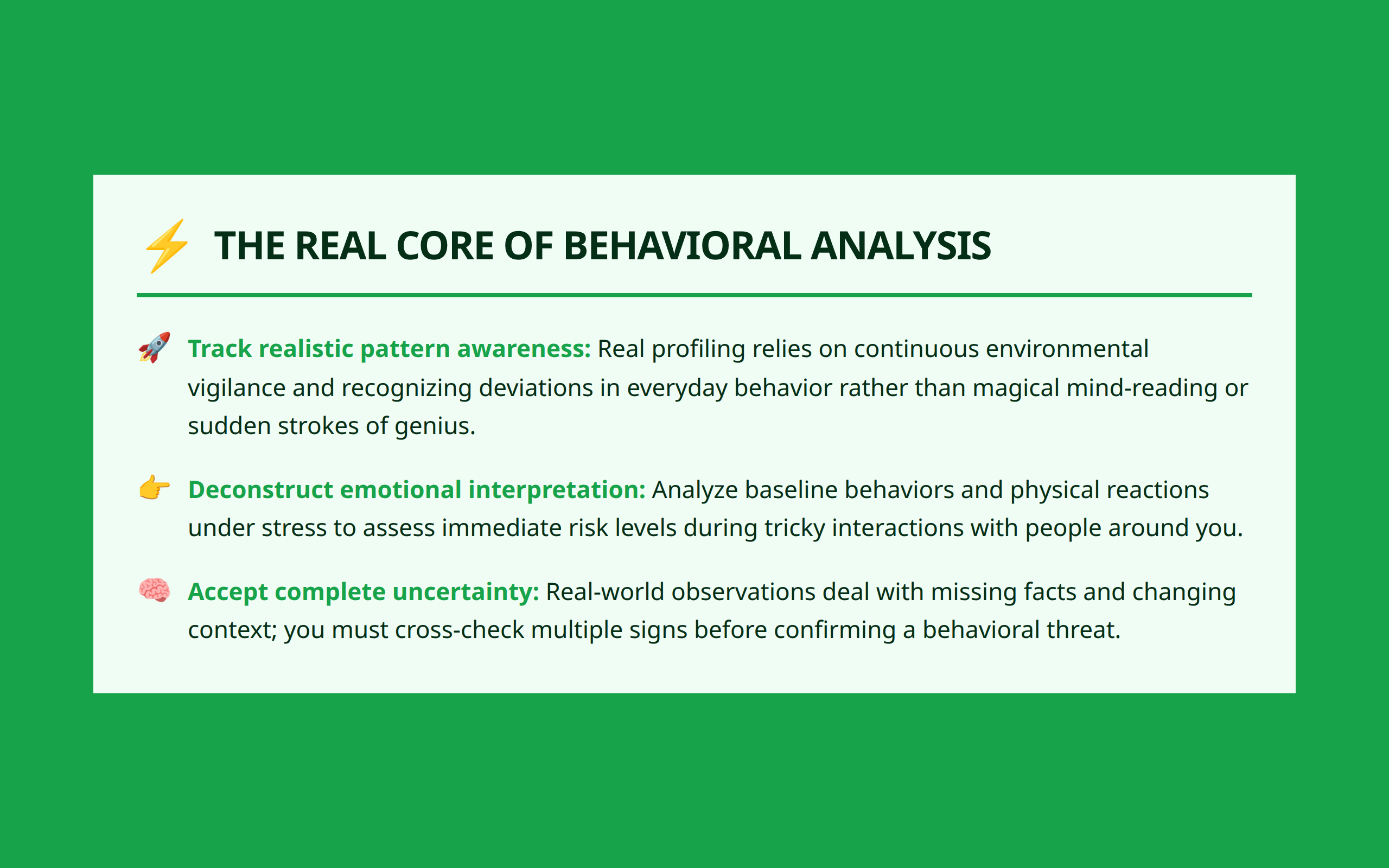
One of the most realistic aspects of behavioral analysis in fiction is environmental vigilance.
A perceptive character often notices small details that feel emotionally inconsistent with the situation:
- someone watching reactions too carefully
- changes in conversational rhythm
- unusual silence after specific questions
- body language that conflicts with spoken confidence
- people positioning themselves strategically in social spaces
None of these observations provide complete answers by themselves. The value comes from pattern accumulation.
For example, a student interacting with an authority figure may notice that the person appears calm verbally while repeatedly monitoring exits, interruptions, or surrounding observers. That does not automatically prove harmful intent. It simply changes the emotional interpretation of the interaction.
I think this is where realistic profiling becomes more interesting than exaggerated fictional deduction. The observer is not decoding hidden secrets perfectly. They are noticing friction between behavior and context.
Threat Recognition Depends on Emotional Interpretation
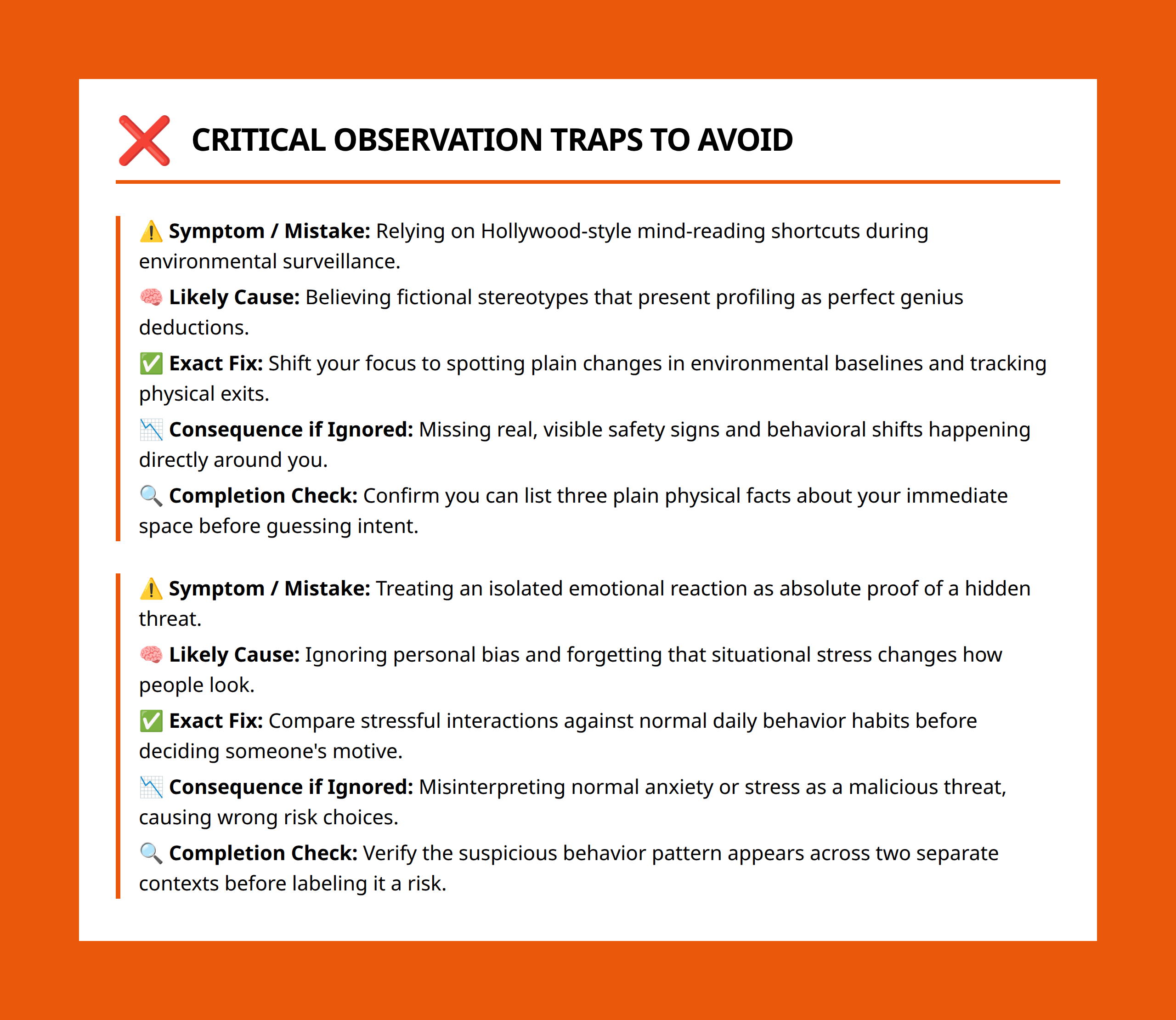
People often misunderstand behavioral analysis as a purely logical process. In practice, emotional interpretation plays a major role.
Perceptive individuals frequently recognize threat before they can explain it clearly.
This happens because the brain constantly evaluates:
- tone shifts
- social tension
- changes in attention
- dominance behavior
- fear responses in other people
- inconsistencies between words and emotional atmosphere
The result is often an incomplete but important feeling that something is wrong.
A useful way to think about this is that behavioral awareness often begins as discomfort before it becomes explanation.
For instance, imagine a conversation where one person appears socially polished and controlled while everyone around them becomes visibly cautious, hesitant, or unusually compliant. A realistic observer may not know the exact reason immediately, but they recognize the emotional imbalance.
That recognition matters because danger frequently appears socially before it appears factually.
Realistic Profiling Relies on Context More Than Isolated Clues
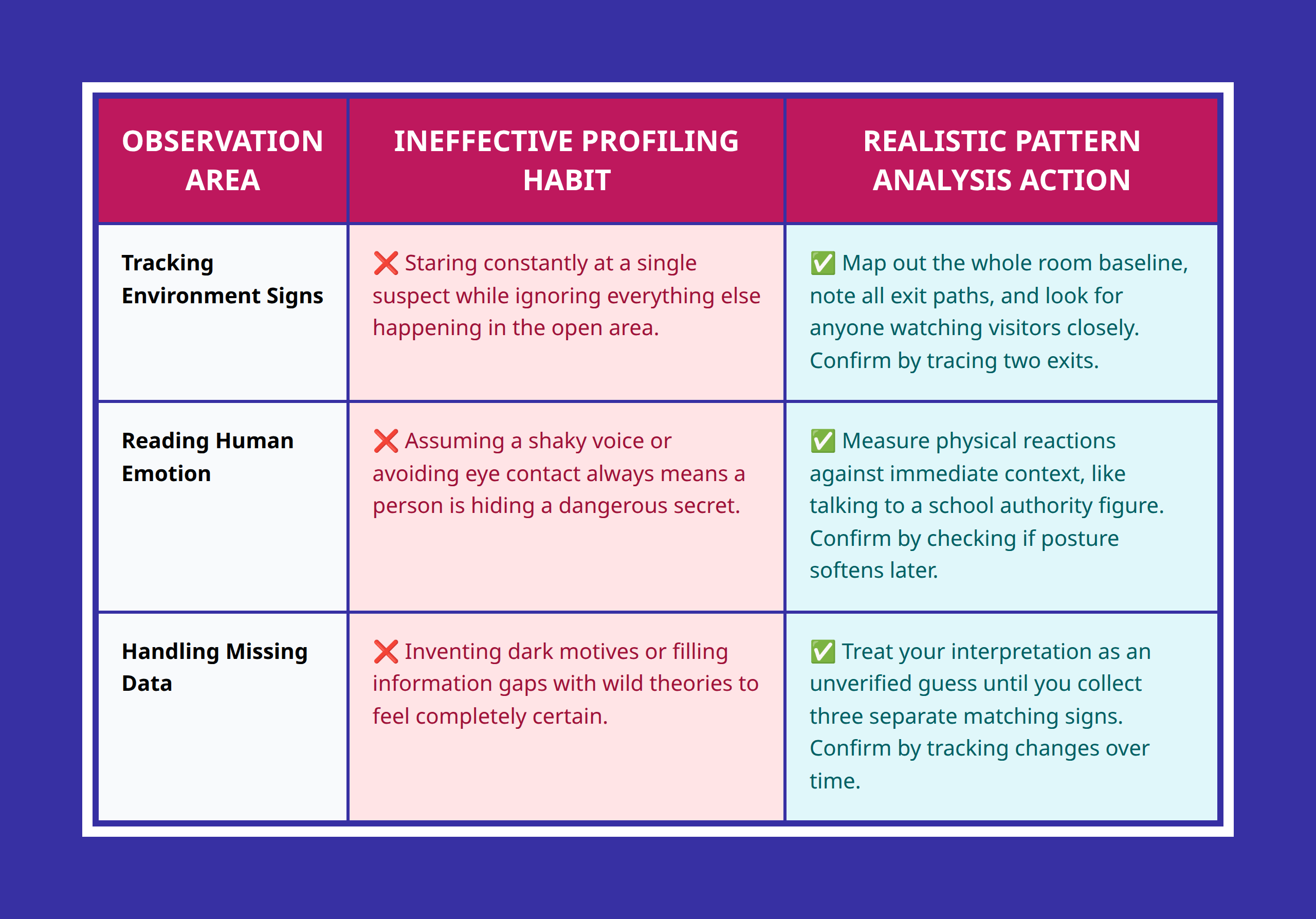
One major difference between believable behavioral analysis and exaggerated fictional profiling is the importance of context.
Realistic observers rarely interpret a behavior in isolation.
The same action can mean completely different things depending on the surrounding environment:
| Behavior | Possible Meaning in One Context | Possible Meaning in Another |
|---|---|---|
| Avoiding eye contact | Anxiety or fear | Social discomfort or distraction |
| Speaking calmly | Emotional control | Strategic self-presentation |
| Watching exits closely | Situational awareness | Threat monitoring |
| Silence during conflict | Caution | Suppressed disagreement |
| Careful friendliness | Politeness | Controlled impression management |
This is why realistic fictional profilers often spend more time observing relationships and environments than delivering dramatic conclusions.
The observer is trying to understand the emotional structure surrounding behavior, not simply classify people into fixed personality types.
Uncertainty Is a Core Part of Threat Assessment
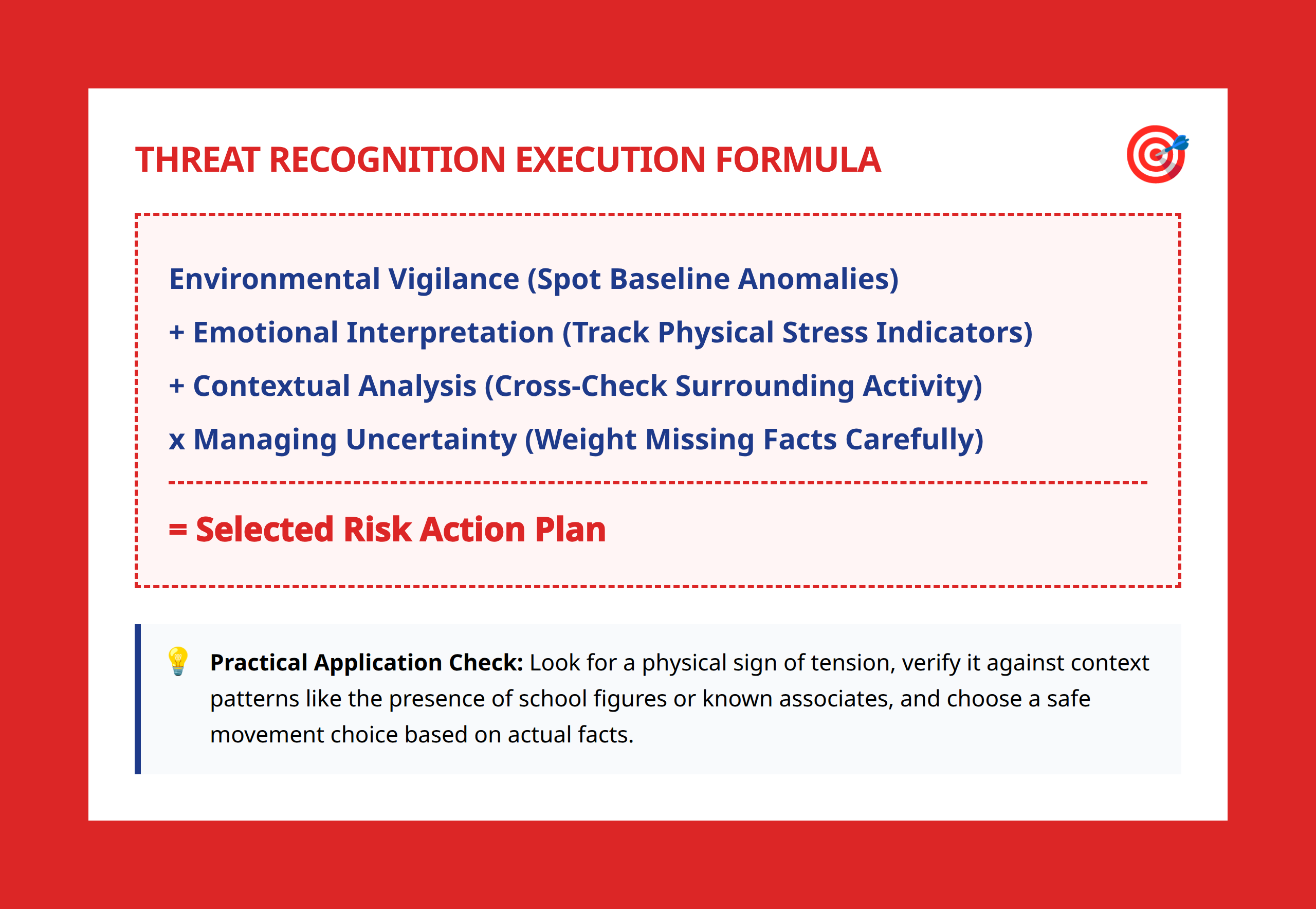
One surprisingly realistic feature of good behavioral fiction is uncertainty.
Perceptive characters frequently doubt themselves. They notice patterns without fully understanding them. They question whether they are overreacting. They revise interpretations as new information appears.
That uncertainty is psychologically believable because real-world threat recognition rarely arrives as complete certainty.
A character may notice:
- repeated inconsistencies
- unusual surveillance awareness
- fear reactions in others
- carefully controlled social performances
Yet none of those details alone confirms intent.
I find this especially important because exaggerated profiling stories often portray observation as magical accuracy. Realistic behavioral awareness is usually probabilistic. The observer is constantly updating risk interpretation rather than “solving” people permanently.
Why Social Dynamics Matter More Than Individual Clues
Some of the most believable profiling scenes focus less on isolated suspects and more on how groups behave around them.
Social environments reveal information indirectly.
For example, an observer may notice:
- certain people becoming quiet around one individual
- subtle fear hidden behind politeness
- social hierarchies shaping conversations
- people monitoring each other before speaking openly
- authority figures controlling emotional tone in a room
These patterns often matter more than dramatic individual gestures.
A realistic observer recognizes that behavior is relational. People change depending on who holds power, who feels threatened, and who controls social consequences.
This creates a more grounded version of profiling because the analysis stays connected to environment instead of turning into unsupported psychological certainty.
Three Things Fictional Profilers Often Get Right About Human Behavior
Even highly stylized thrillers occasionally capture realistic aspects of behavioral interpretation surprisingly well.
1. People Reveal Stress Through Contradiction
Behavior becomes more informative when emotional presentation conflicts with context. Someone speaking calmly while the surrounding environment becomes tense may deserve closer attention than someone openly emotional.
2. Observation Works Better Over Time
Single behaviors are unreliable. Patterns across repeated interactions are much more useful.
A character who consistently notices the same relational dynamics over multiple encounters appears far more believable than one making instant psychological diagnoses.
3. Threat Recognition Often Begins Before Explanation
Many realistic observers recognize emotional danger before they fully understand the mechanism behind it.
That discomfort is not mystical intuition. It is accumulated environmental processing happening faster than conscious explanation.
The Most Realistic Profilers Usually Look Careful, Not Brilliant
Popular fiction often treats profilers as extraordinary intellectual performers who decode hidden truths instantly. The more believable versions tend to look different.
They pay attention consistently. They notice environmental shifts. They track contradictions. They stay alert to uncertainty. Most importantly, they avoid assuming that observation automatically equals certainty.
The practical lesson behind realistic behavioral analysis is surprisingly simple: threat recognition usually depends less on dramatic genius and more on disciplined attention to patterns, relationships, emotional atmosphere, and context that other people dismiss too quickly.
References:
- https://www.casecracker.com/2025/06/28/6-real-criminal-cases-where-criminal-profiling-made-a-critical-difference/
- https://leb.fbi.gov/articles/featured-articles/criminal-investigative-analysis-practitioner-perspectives-part-one-of-four
- https://www.reddit.com/r/MindHunter/comments/es03ss/what_was_the_biggest_win_in_profiling_and/
- https://www.reddit.com/r/MindHunter/comments/es03ss/what_was_the_biggest_win_in_profiling_and/ff9cnk5/
- https://www.reddit.com/r/serialkillers/comments/6jx5a0/how_accurate_is_criminal_minds_regarding_reallife/
- https://www.reddit.com/r/books/comments/dq36z/can_anyone_help_me_think_of_a_thesis_for_criminal/
- https://isabellamaldonado.com/the-fbis-real-mind-hunters/
- https://screenrant.com/things-criminal-minds-got-wrong-right-about-criminal-profiling/
- https://ur.bc.edu/system/files/2025-04/bc-ir102210.pdf
- https://crimereads.com/why-criminal-profiling-is-a-pop-culture-myth/
- https://www.quora.com/Who-was-the-greatest-criminal-profiler
- https://us.sagepub.com/sites/default/files/upm-binaries/50423_ch_2.pdf
- https://brainly.com/question/41631041
- https://en.wikipedia.org/wiki/Behavioral_Analysis_Unit
- https://www.fbi.gov/how-we-investigate/behavioral-analysis
