One of the most common mistakes intermediate investors make is believing that a highly detailed valuation model automatically creates investment safety. Complex spreadsheets, discounted cash flow assumptions, terminal growth estimates, and carefully adjusted multiples can create the impression of precision. But investing does not become safe simply because the math looks sophisticated.
The deeper problem is that valuation itself depends on uncertain assumptions about the future. Revenue growth can slow unexpectedly. Margins can compress. Competition can intensify. Interest rates can change. Management decisions can fail. Even strong businesses can encounter environments investors did not anticipate.
This is why the idea of a margin of safety remains so important. Valuation is not primarily about predicting exact outcomes. It is about managing uncertainty intelligently.
Why Intrinsic Value Is Always an Estimate, Not a Fact
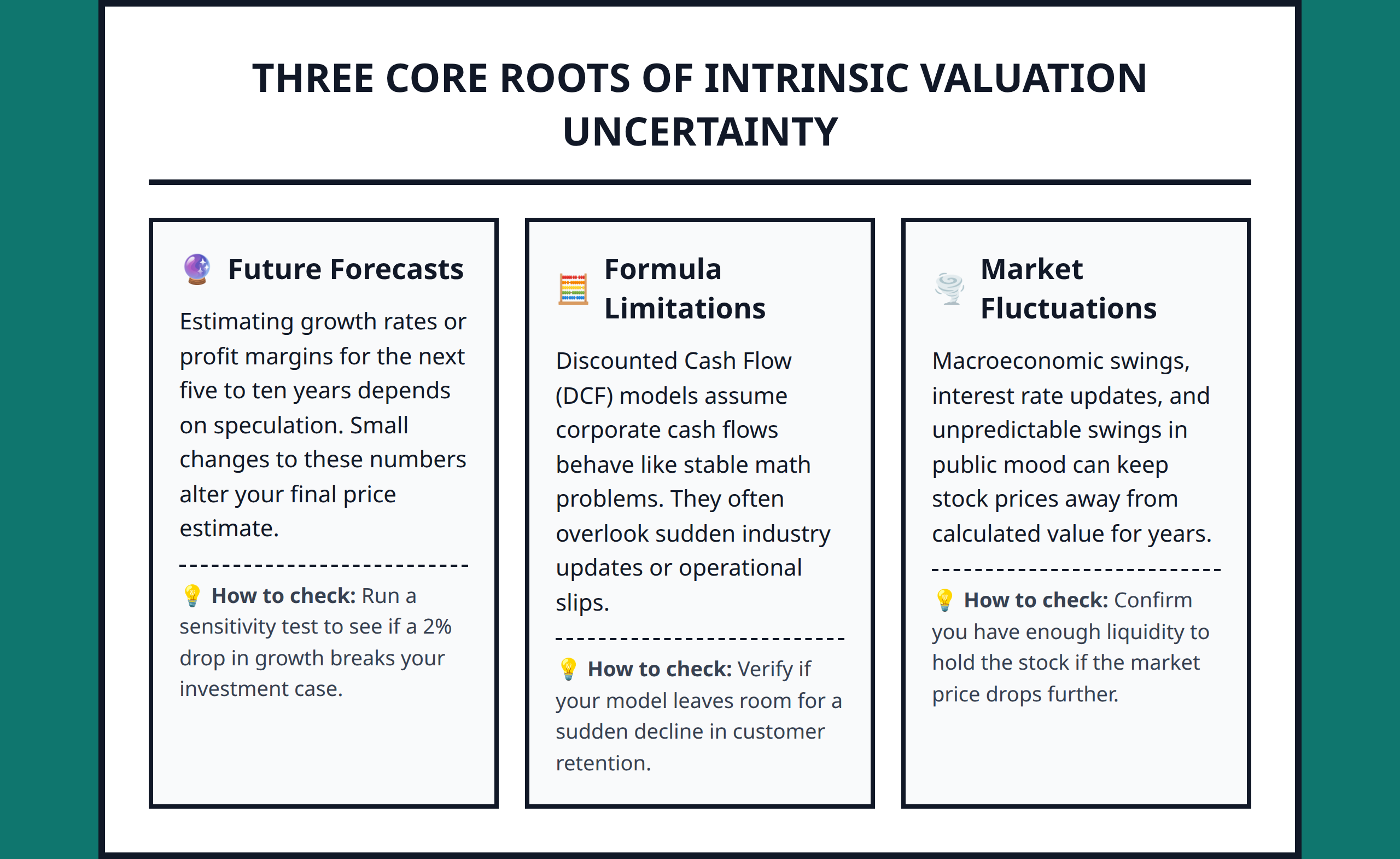
Many investors talk about intrinsic value as if it were a precise number hidden inside a business waiting to be discovered. In reality, intrinsic value is an estimate built from assumptions about future cash flows, growth rates, profitability, competitive durability, and capital allocation.
Even small assumption changes can dramatically alter valuation outcomes.
For example:
- A company expected to grow earnings at 12% instead of 8% may appear substantially more valuable
- A slight increase in discount rates can reduce future present values sharply
- Margin compression can weaken long-term cash generation assumptions
- A slower terminal growth estimate can materially change DCF outputs
I find this distinction useful because many investors accidentally confuse mathematical detail with certainty. A valuation model may appear highly rigorous while still depending on fragile assumptions underneath.
Why Discounted Cash Flow Models Create False Confidence
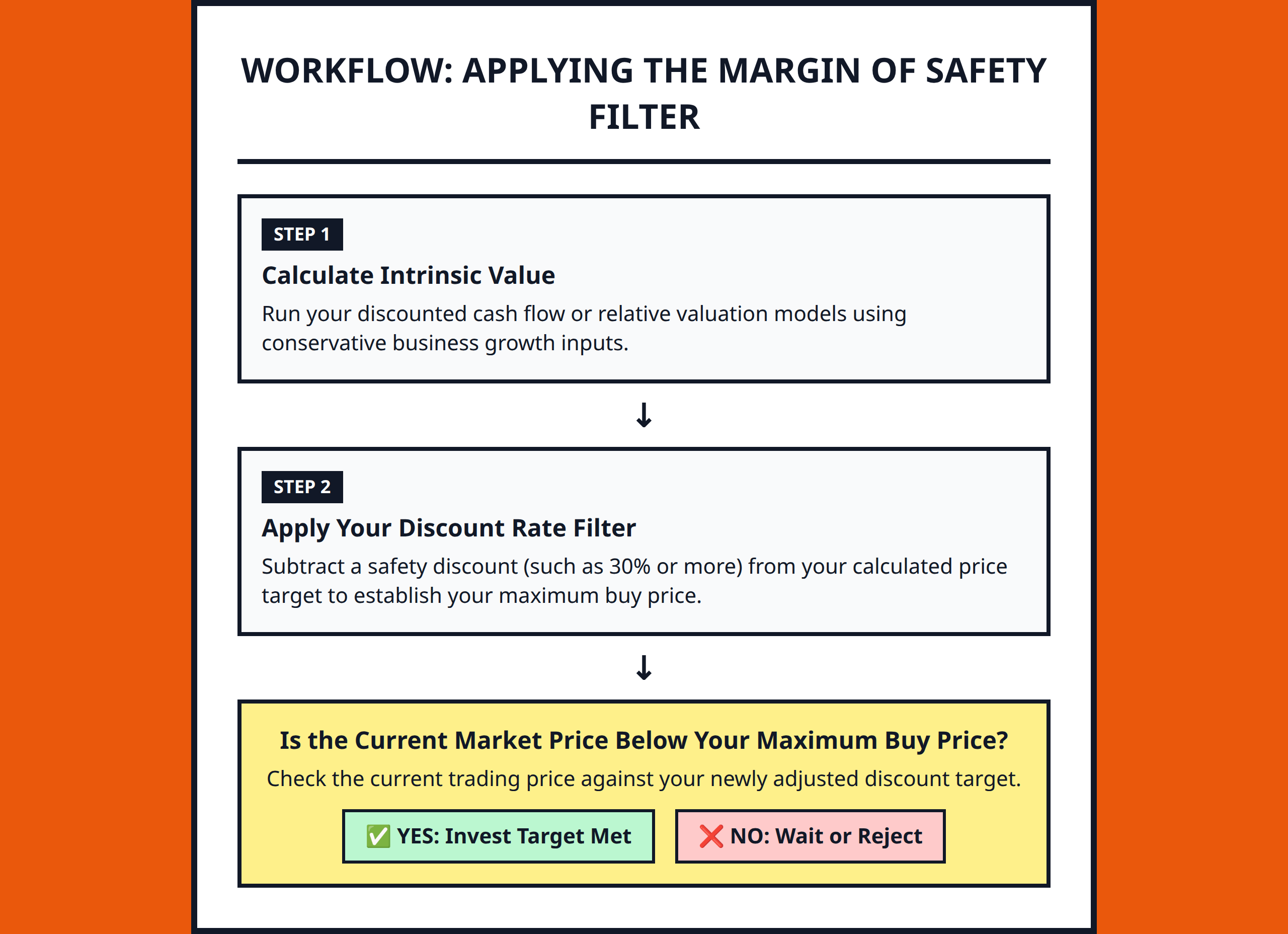
Discounted cash flow analysis remains one of the most respected valuation approaches because it attempts to estimate the present value of future cash generation. Conceptually, the framework is rational and useful.
The limitation is that DCF models become extremely sensitive to forecasting assumptions.
A practical example is forecasting a company’s future free cash flow for ten years. Investors must estimate:
- Revenue growth
- Operating margins
- Capital expenditures
- Tax environments
- Competitive pressures
- Reinvestment efficiency
- Terminal growth rates
Each estimate introduces uncertainty. When combined together, the total uncertainty compounds significantly.
I would think about DCF models less like precision instruments and more like structured reasoning frameworks. They help investors organize expectations logically, but they cannot eliminate unpredictability.
Relative Valuation Has Different Weaknesses
Some investors avoid DCF complexity by relying more heavily on relative valuation methods such as price-to-earnings ratios, EV/EBITDA, or price-to-sales multiples.
These methods appear simpler, but they introduce different risks.
Relative valuation depends heavily on comparisons:
- What companies qualify as valid peers?
- Are industry multiples themselves inflated?
- Do current market conditions distort pricing?
- Are margins, growth quality, or business durability actually comparable?
A useful example is comparing two software companies trading at similar multiples while ignoring major differences in customer retention, profitability, or recurring revenue quality.
The mistake I would avoid here is assuming relative valuation is safer simply because it uses fewer assumptions explicitly. Sometimes the assumptions are simply hidden inside market pricing itself.
Why Market Conditions Constantly Disrupt Valuation Models
Valuation models operate inside changing market environments, not stable laboratory conditions.
Interest rates, liquidity conditions, inflation expectations, economic cycles, and investor psychology all influence how markets price businesses.
For example:
| Market Environment | Typical Valuation Effect |
|---|---|
| Low interest rates | Higher growth valuations |
| High inflation | Pressure on long-duration assets |
| Economic uncertainty | Lower risk appetite |
| Speculative bull markets | Expanded valuation multiples |
| Liquidity stress | Compressed valuations broadly |
This creates a major challenge for investors. Even if a business performs reasonably well operationally, external market conditions may still change how investors value those future cash flows.
I think this is one reason valuation becomes dangerous when treated like engineering precision. Markets are adaptive systems influenced by psychology and macroeconomic conditions, not purely mechanical equations.
What the Margin of Safety Actually Protects Against
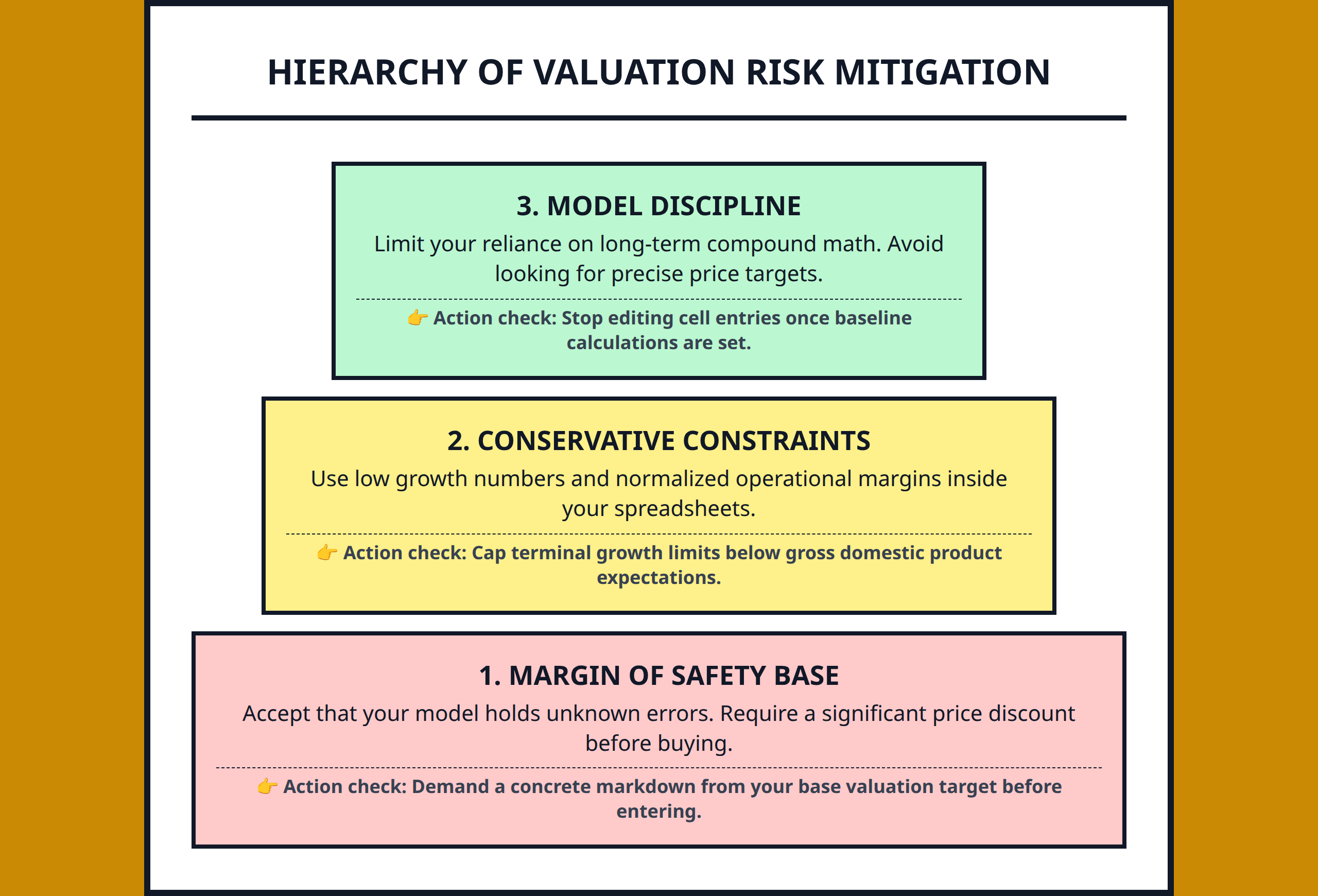
The margin of safety exists because investors cannot forecast perfectly.
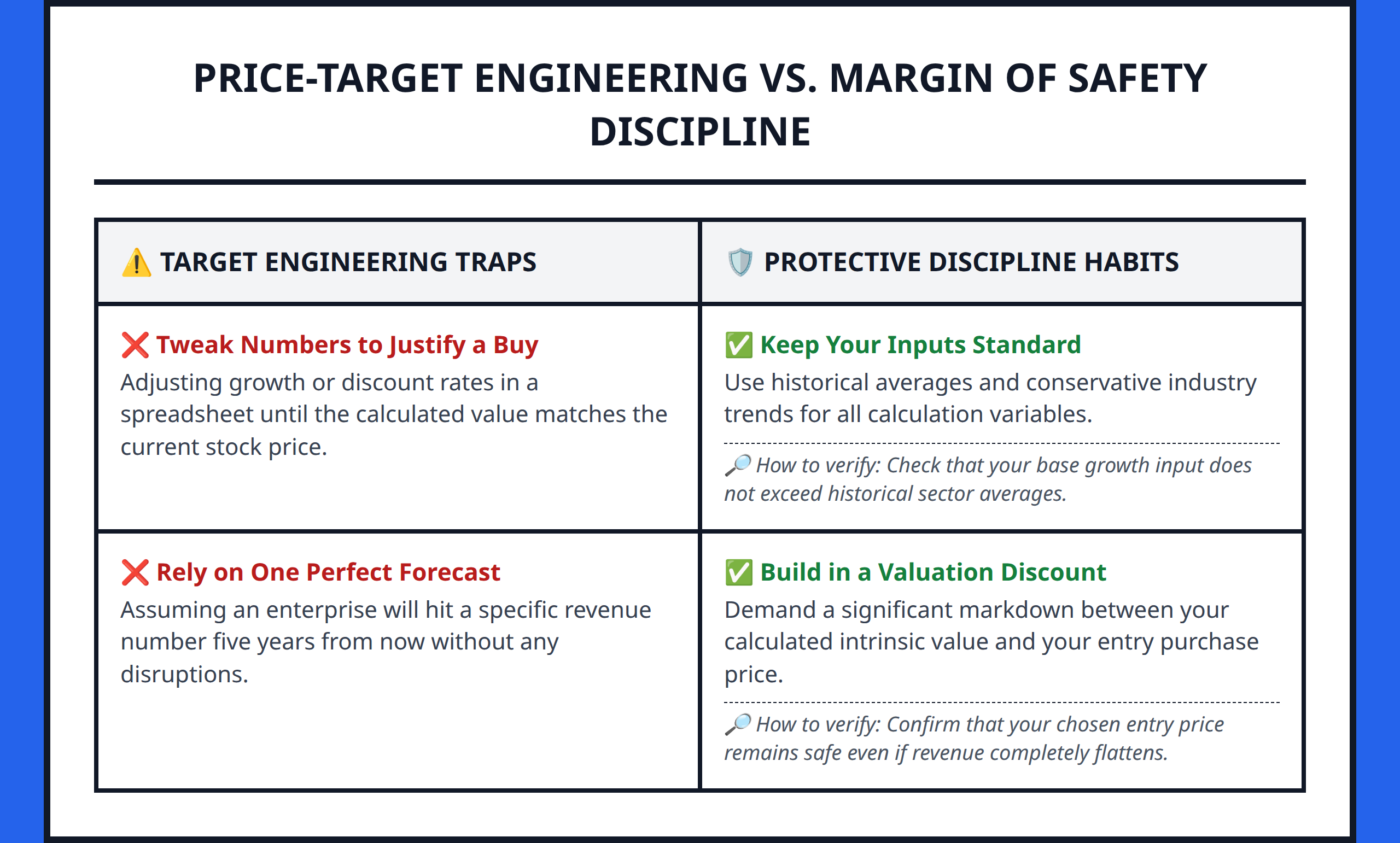
A useful way to understand the concept is that the margin of safety creates room for error between estimated value and purchase price. Instead of assuming assumptions will prove exactly correct, investors deliberately build protection against uncertainty.
This protection may help offset:
- Forecasting mistakes
- Unexpected competition
- Economic downturns
- Management execution problems
- Interest-rate shifts
- Temporary market panic
For example, if an investor estimates a business may reasonably be worth $100 per share, buying near $95 leaves very little protection if assumptions weaken slightly. Buying at $65 or $70 creates more room for uncertainty without requiring perfect execution.
The important point is not finding mathematically perfect discounts. The goal is improving the balance between upside potential and downside risk.
Why Valuation Discipline Is Really About Risk Management
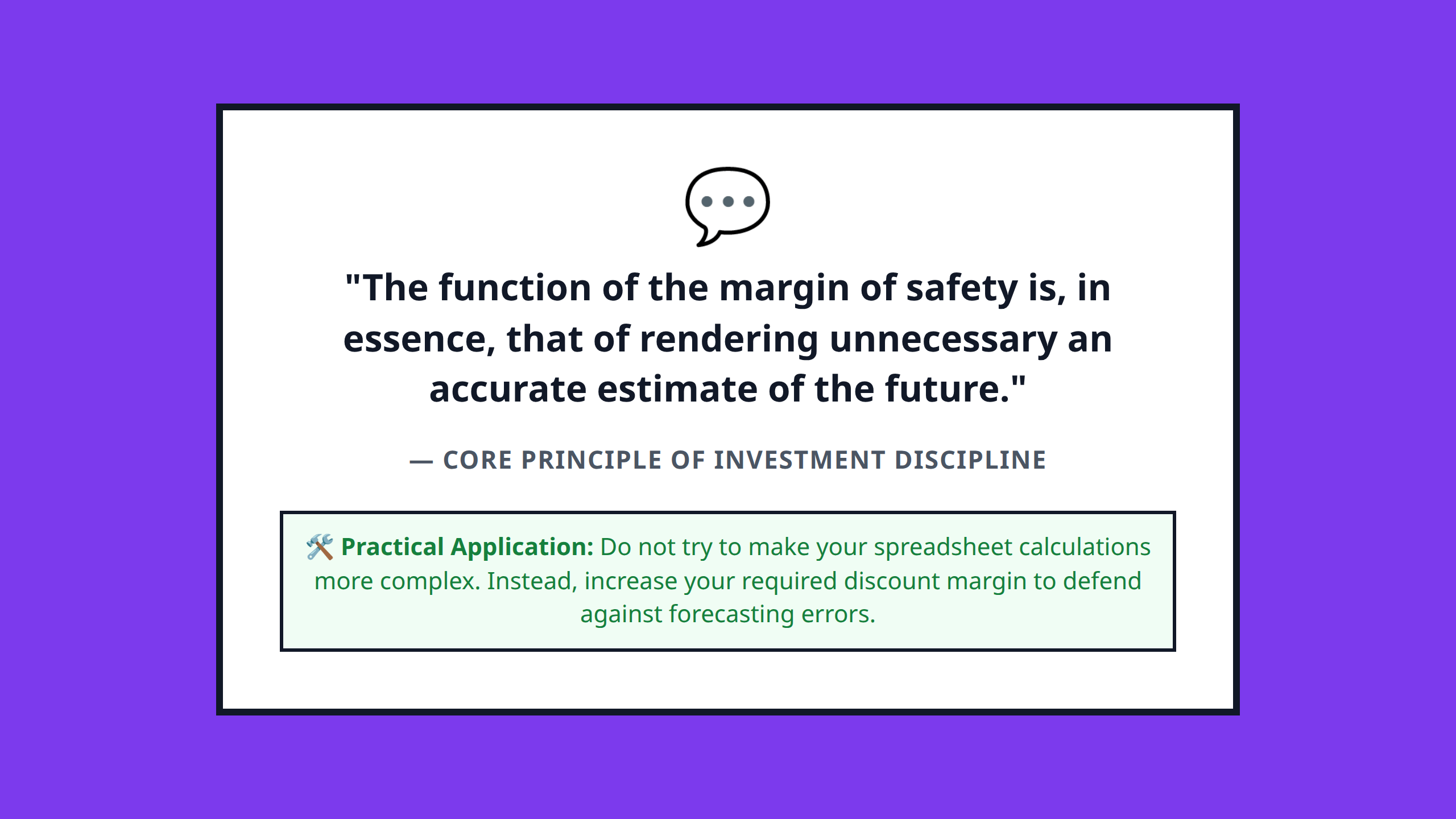
Many investors treat valuation primarily as a tool for predicting future stock prices. A more durable approach is viewing valuation as a risk-management framework.
This changes investor behavior significantly.
| Prediction-Focused Investing | Risk-Managed Valuation Investing |
|---|---|
| Seeks precise future price targets | Focuses on downside protection |
| Assumes forecasts will be accurate | Assumes uncertainty is unavoidable |
| Relies heavily on optimistic assumptions | Builds room for forecasting error |
| Treats valuation as certainty | Treats valuation as probability |
| Often becomes fragile during volatility | Attempts to remain resilient across cycles |
I find this distinction especially important because investors often become overconfident when models produce clean numerical outputs. But investing outcomes usually depend less on spreadsheet elegance and more on how investors handle uncertainty when reality differs from expectations.
Why Great Businesses Can Still Become Bad Investments
One of the hardest lessons for investors is that business quality alone does not guarantee investment success.
A strong company purchased at an unrealistic valuation may still produce weak long-term returns if future expectations become too optimistic.
A practical example is a dominant company trading at extremely elevated multiples during periods of market euphoria. Even if the business continues growing, shareholder returns may disappoint if valuation compression offsets operational performance.
This is where margin-of-safety thinking becomes useful. Investors are not only evaluating whether a company is excellent. They are evaluating whether current pricing already assumes nearly perfect future outcomes.
I would not frame valuation discipline as pessimism. It is more accurately a recognition that future business conditions rarely unfold exactly as projected.
How Investors Can Apply Margin-of-Safety Thinking Practically
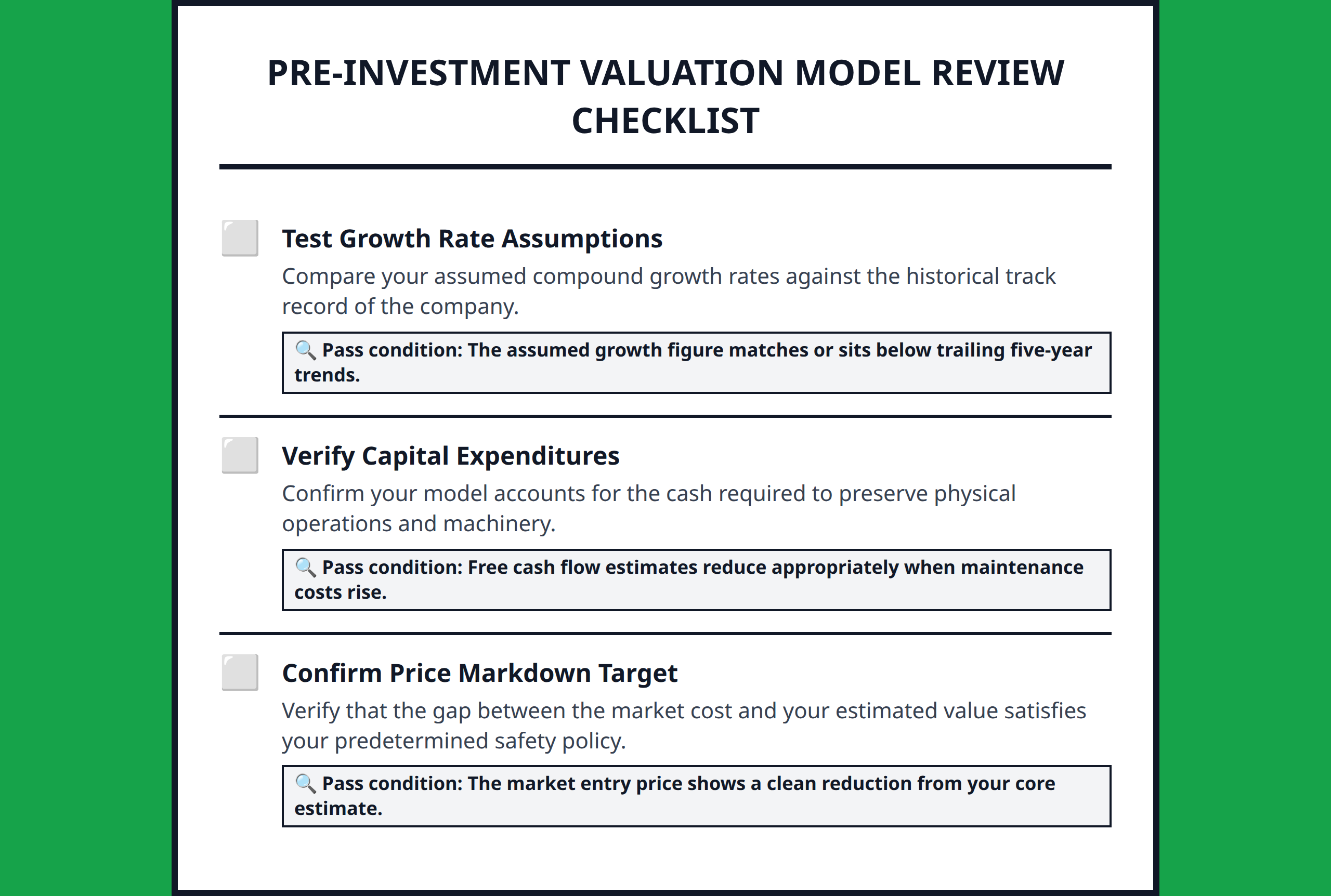
You do not need institutional-level models to apply margin-of-safety principles effectively.
A practical approach often includes:
- Using conservative growth assumptions
- Avoiding dependence on perfect execution
- Stress-testing downside scenarios
- Separating business quality from stock price
- Demanding reasonable valuation discounts when uncertainty is high
For example, instead of assuming a company will maintain unusually high margins forever, an investor may model moderate competitive pressure over time. Instead of assuming uninterrupted growth, they may allow for cyclical weakness or slower expansion.
The purpose is not becoming excessively pessimistic. It is reducing the probability of permanent capital impairment if conditions become less favorable than expected.
Why Market Unpredictability Makes Humility Essential
Markets regularly remind investors that even intelligent analysis has limits.
Unexpected events, macroeconomic shifts, competitive disruption, and emotional market cycles can all change investment outcomes in ways models fail to capture fully.
This is why valuation discipline works best when combined with humility.
Strong investors usually recognize:
- Future outcomes are probabilistic
- Forecasting precision has limits
- Market sentiment can change rapidly
- Risk cannot be eliminated completely
- Protection matters more than perfect prediction
The practical value of a margin of safety is not that it guarantees success. It is that it acknowledges uncertainty honestly while improving resilience against the many ways reality can diverge from even the most sophisticated valuation model.
References:
- https://www.reddit.com/r/ValueInvesting/comments/1rm81ez/your_margin_of_safety_does_not_exist/
- https://www.reddit.com/r/ValueInvesting/comments/1rindfi/most_retail_investors_do_not_have_a_valuation/
- https://www.reddit.com/r/startups/comments/12pfvi0/convince_me_valuations_models_are_just_fancy/
- https://medium.com/@nifmstudies1/margin-of-safety-in-investing-the-most-ignored-valuation-principle-9262fa79a346
- https://www.tlcadvisory.com/market-insights-price-valuation-still-matters-as-a-margin-of-safety/
- https://www.investing.com/academy/analysis/what-are-valuation-models/
- https://stfbutnou.substack.com/p/does-valuation-still-matter-when
- https://financialmodelslab.com/blogs/blog/margin-of-safety
- https://www.linkedin.com/pulse/why-legacy-valuation-models-fail-age-ai-disruption-bravery-group-8l6te
- https://acquirersmultiple.com/2022/10/warren-buffett-you-dont-always-need-a-large-margin-of-safety/
- https://genrptfinance.com/blogs/why-margin-of-safety-still-defines-smart-equity-valuation/
- https://zebralearn.com/schools/relative-valuation-in-detail-1/pitfalls-and-challenges-of-relative-valuation/
- https://www.sage.com/en-gb/blog/calculate-margin-of-safety/
