One of the easiest mistakes investors make is assuming historical performance alone can explain future stock returns. Strong revenue growth, expanding margins, or impressive earnings history may look attractive on paper, but markets are forward-looking systems. Stock prices usually move based on changing expectations about the future rather than what already happened.
This is why catalysts matter so much in investment analysis. A catalyst is not simply “good news.” It is a development capable of materially changing how investors think about a company’s future earnings power, profitability, competitive position, or capital allocation.
I would think about catalysts this way: they are mechanisms that shift future expectations before those changes fully appear in reported financial results. Investors who identify meaningful catalysts early often gain an informational advantage because markets gradually reprice businesses as future outcomes become more visible.
Why Backward-Looking Analysis Often Misses Future Opportunity
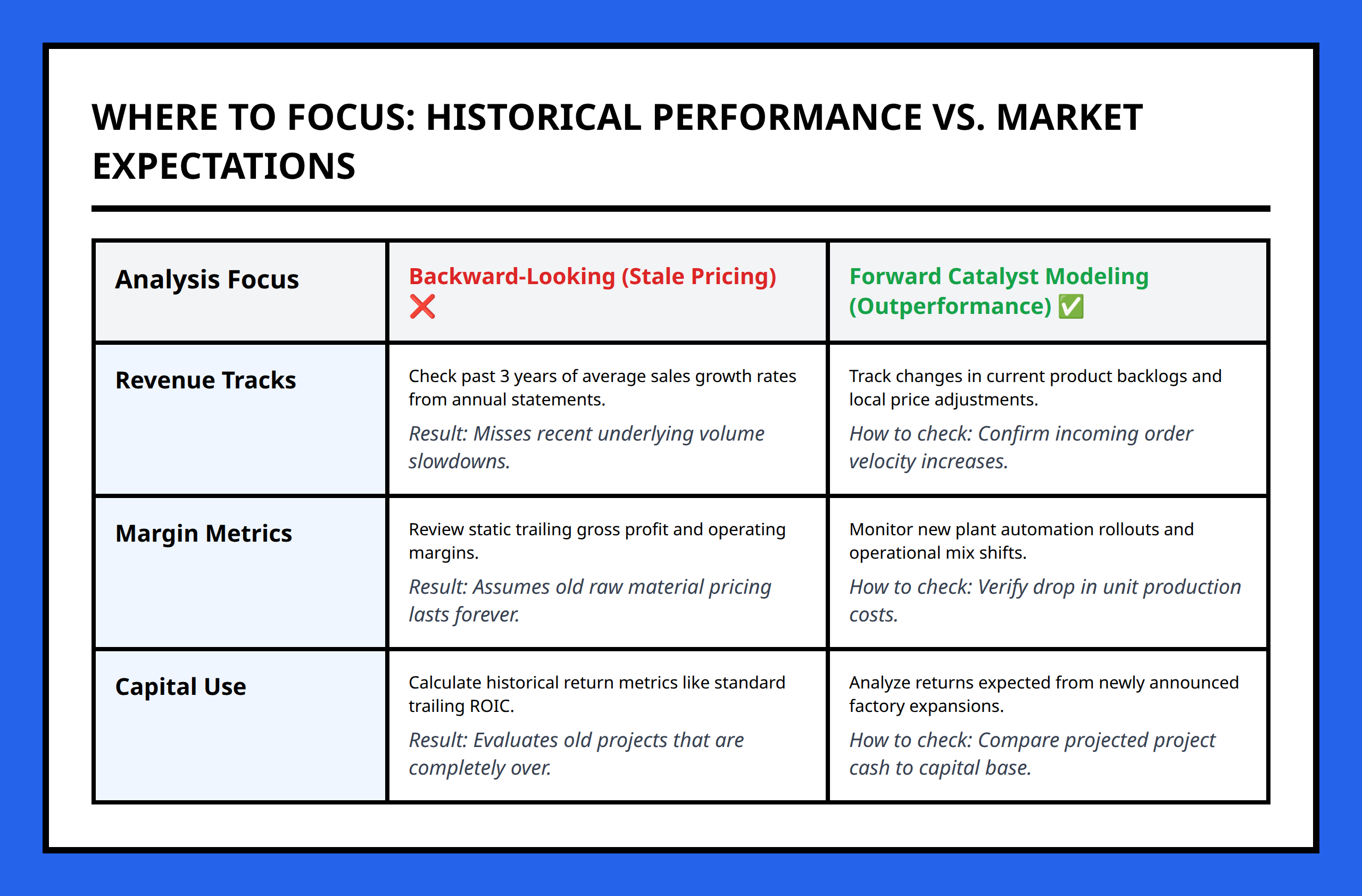
Many investors rely heavily on historical financial ratios because they appear objective and measurable. Metrics like revenue growth, operating margins, return on equity, and earnings trends are useful, but they mainly describe what already happened.
The problem is that stock prices often begin adjusting long before financial statements fully reflect business changes.
For example:
- A company launching a higher-margin product may see investor optimism rise before margins actually expand
- A restructuring program may improve future profitability before earnings recover
- New management may alter capital allocation expectations before quarterly results change materially
- Demand recovery in a cyclical industry may shift market sentiment before revenues accelerate
This distinction matters because markets constantly attempt to discount future outcomes in advance. Investors focusing only on trailing numbers sometimes react too late to meaningful business transitions.
What Makes a Real Catalyst Different From Temporary Excitement
Not every positive development qualifies as a meaningful catalyst. Some events generate short-term attention without materially changing long-term economics.
A useful way to separate real catalysts from temporary excitement is to ask:
Does this development meaningfully change future cash flow potential, profitability, competitive positioning, or investor expectations?
Real catalysts typically affect the underlying business structure or future earning power. Weak catalysts mainly influence short-term sentiment without altering business fundamentals.
| Weak or Temporary Catalyst | Potentially Meaningful Catalyst |
|---|---|
| Short-lived media attention | Sustainable demand expansion |
| Speculative hype cycles | Margin improvement initiatives |
| Temporary momentum | New recurring revenue streams |
| Unclear strategic announcements | Operational restructuring with measurable impact |
| Pure narrative enthusiasm | Capital allocation improvements |
I find this distinction useful because many investors confuse attention with transformation. Markets can become excited about stories temporarily, but durable stock performance usually depends on developments that alter future economics in a measurable way.
How Demand Shifts Become Powerful Catalysts
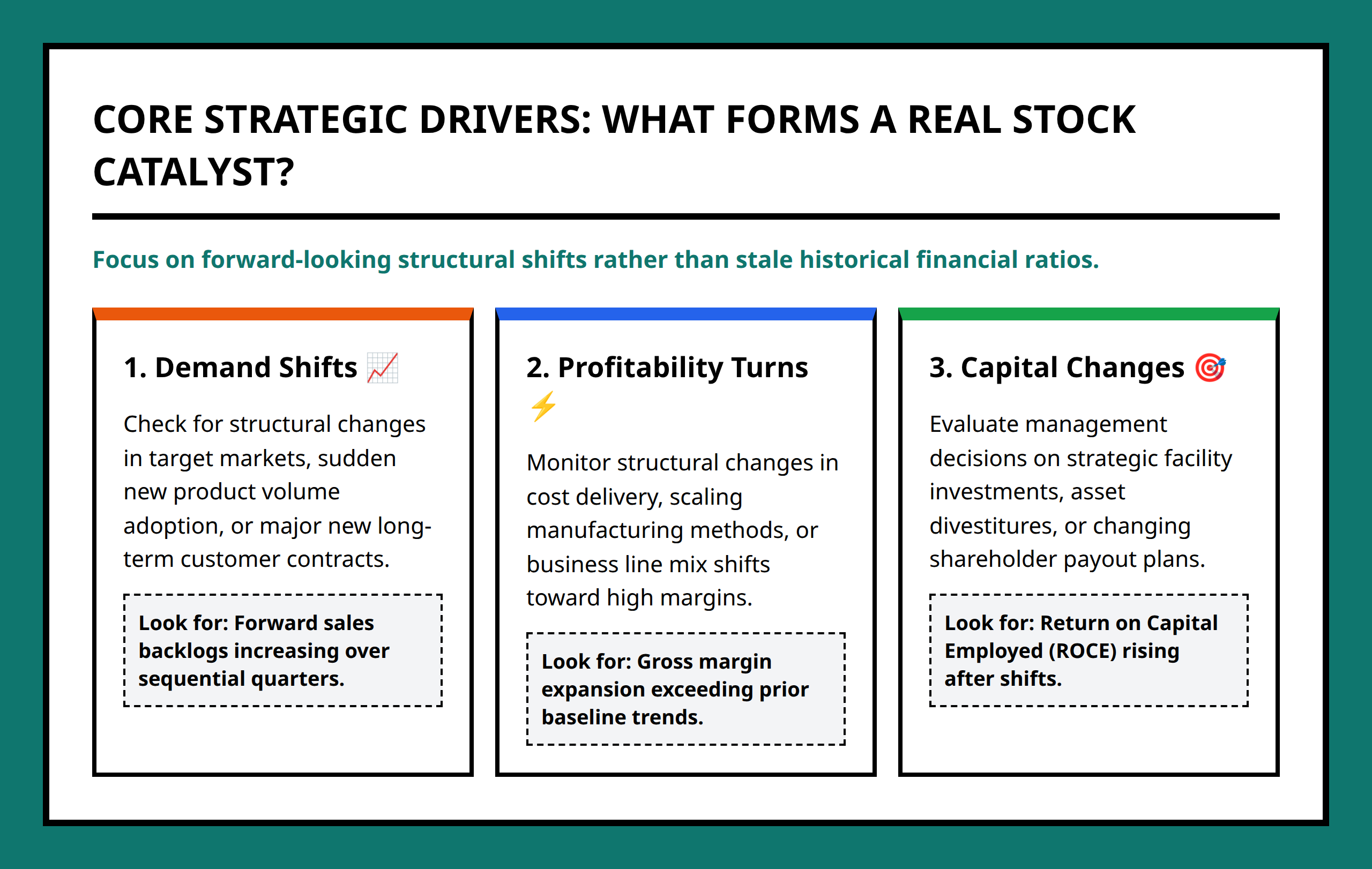
One of the most important catalyst categories involves changes in demand.
Demand catalysts may emerge through:
- New product adoption
- Industry growth acceleration
- Geographic expansion
- Consumer behavior changes
- Market-share gains
The important point is not simply that demand increases. Investors must evaluate whether the demand change is temporary, cyclical, or structurally durable.
For example, a software company transitioning from enterprise-only customers toward broader subscription adoption may experience a meaningful long-term demand catalyst because the addressable market expands substantially. Meanwhile, temporary spikes tied to unusual short-term conditions may not create durable future growth.
The mistake I would avoid here is extrapolating short-term demand too aggressively into permanent assumptions. Markets often become overly optimistic when recent growth trends appear unusually strong.
Why Profitability Catalysts Matter More Than Revenue Alone
Revenue growth attracts attention, but profitability improvements often have a larger effect on long-term valuation.
This is because small operational improvements can dramatically change future earnings potential.
Examples of profitability catalysts include:
- Cost restructuring
- Supply-chain efficiency improvements
- Automation initiatives
- Higher-margin product mix shifts
- Pricing power expansion
A practical example is a business moving from low-margin hardware sales toward higher-margin recurring services. Even moderate revenue growth can produce substantial earnings expansion if operating economics improve significantly.
I think many investors underestimate how powerfully margin expansion influences future valuation expectations. Markets frequently reward businesses that demonstrate improving efficiency because future cash generation becomes more predictable.
Capital Allocation Can Become a Hidden Catalyst
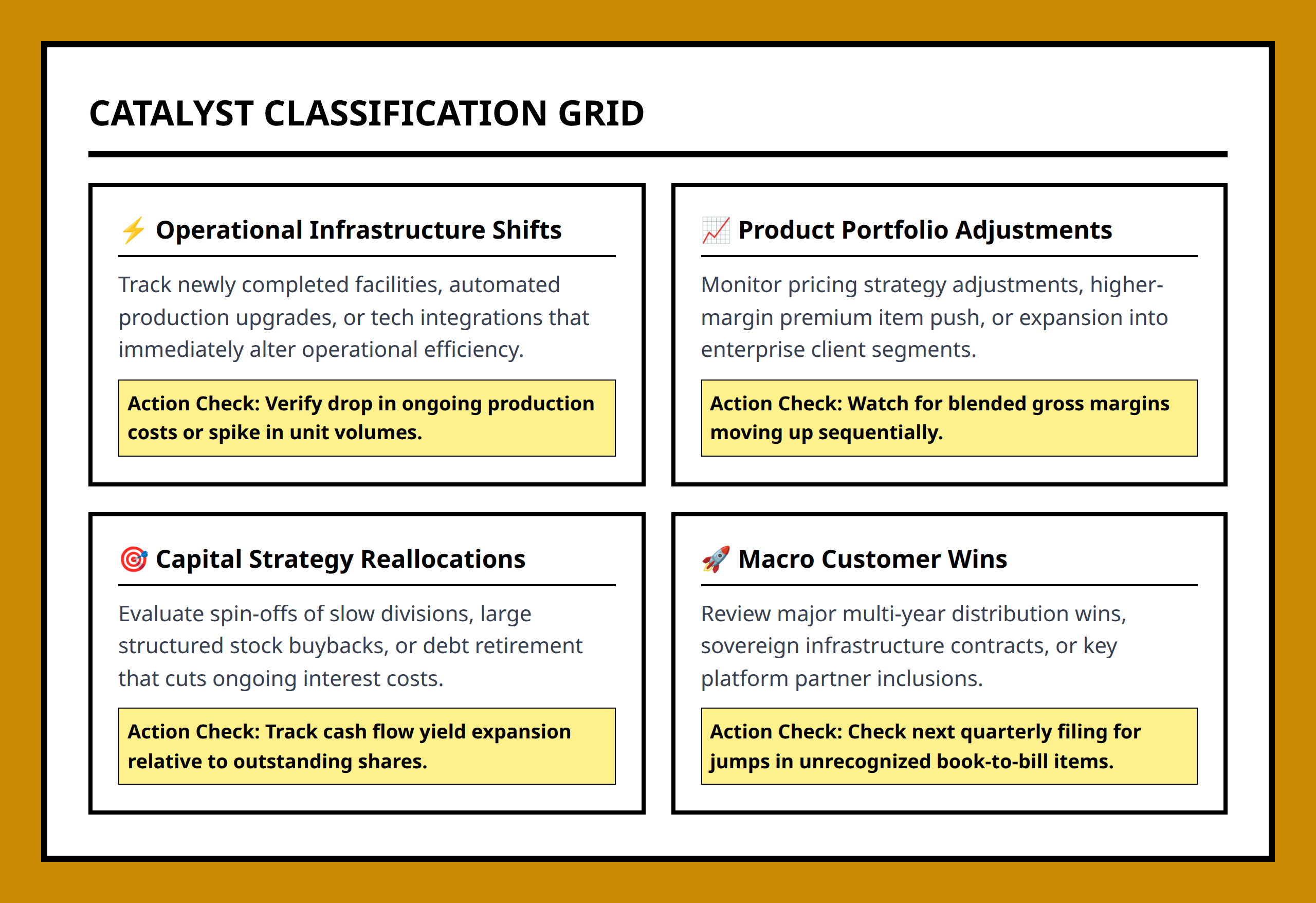
Capital allocation decisions often receive less attention than revenue growth, but they can materially affect long-term shareholder value.
Important capital allocation catalysts may include:
- Debt reduction
- Share repurchases
- Disciplined acquisitions
- Divestitures of weak business units
- Reinvestment into higher-return operations
A useful way to think about this is that management decisions shape how effectively future cash flows are deployed.
For example, two companies may generate similar profits, but one leadership team reinvests capital into high-return expansion opportunities while the other pursues inefficient acquisitions. Over time, the market may reward the stronger capital allocation framework with higher valuation multiples.
I would not treat every buyback or acquisition announcement as automatically positive. The more important issue is whether management is improving long-term business economics rather than simply creating short-term excitement.
Why Expectations Matter More Than Absolute Results
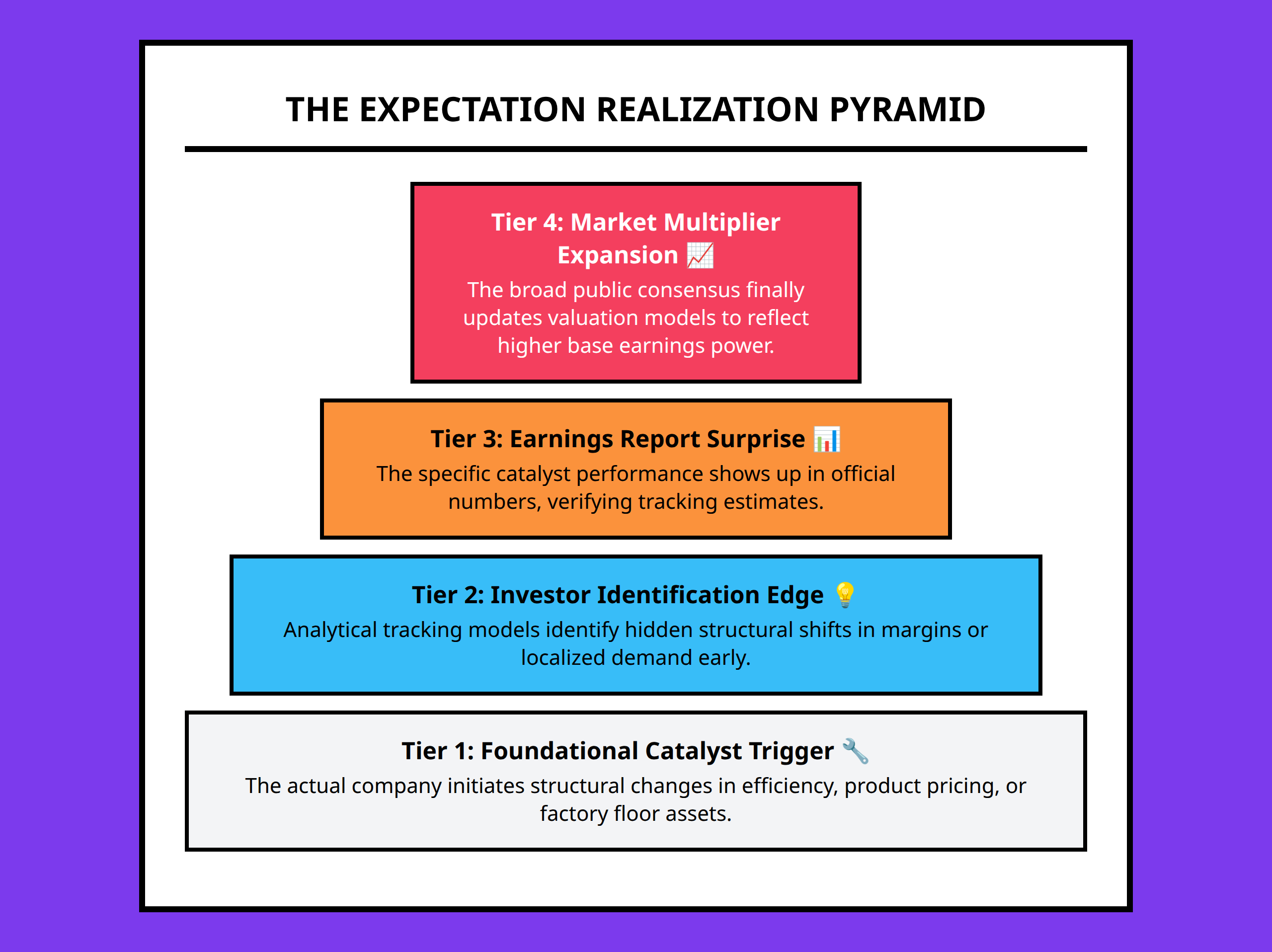
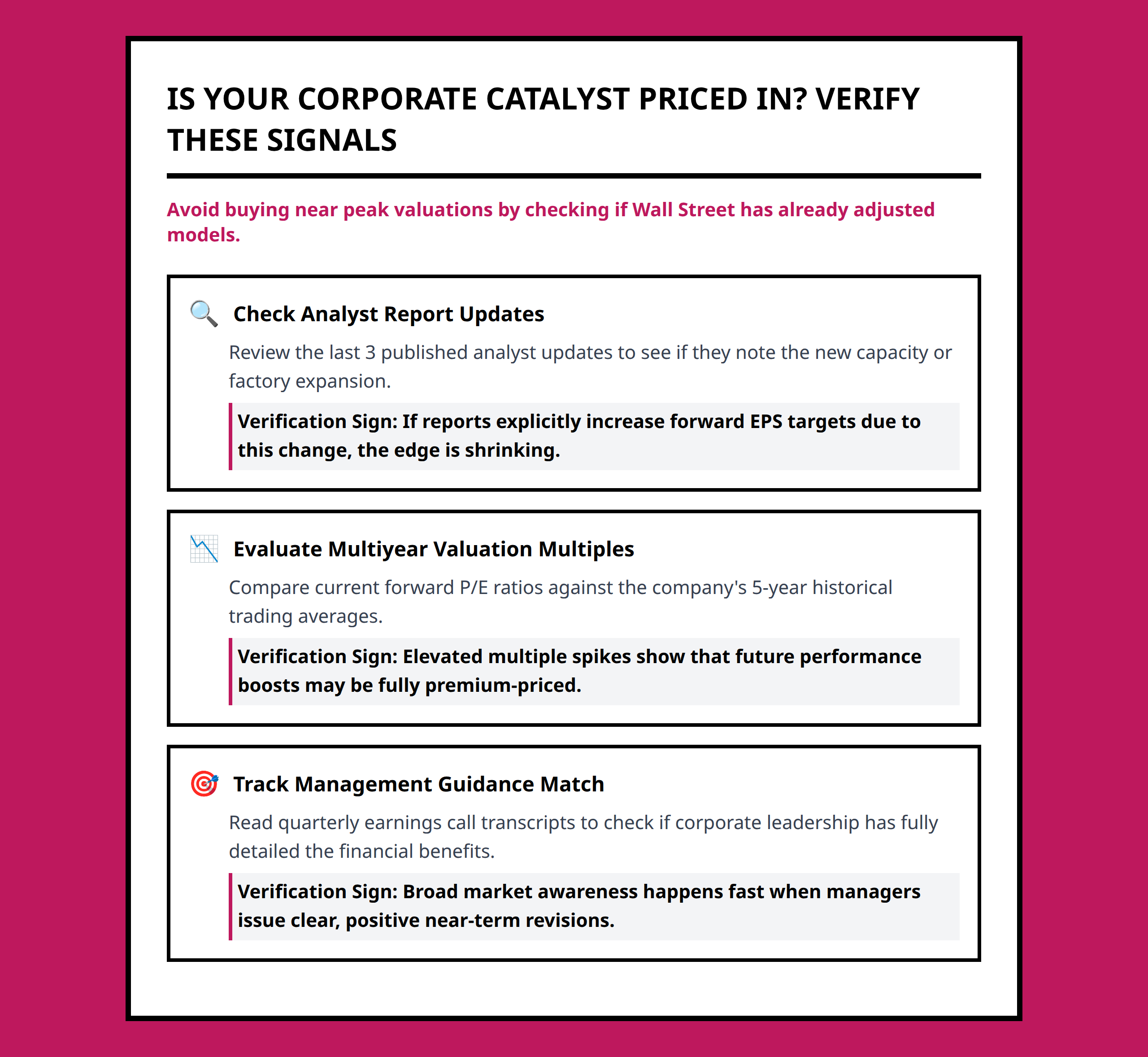
One of the most misunderstood parts of investing is that stock prices react heavily to the gap between expectations and actual outcomes.
A company can report strong earnings and still decline if investors expected even better results. Meanwhile, a struggling company may rally sharply if results improve faster than feared.
This is why catalyst investing depends heavily on expectation-setting.
| Market Situation | Potential Market Reaction |
|---|---|
| Strong results below high expectations | Negative stock reaction |
| Moderate results above pessimistic expectations | Positive stock reaction |
| Future catalyst underestimated | Potential repricing opportunity |
| Catalyst already fully priced in | Limited upside despite good news |
I find this especially important because many retail investors focus only on whether a company is “doing well” operationally. Markets care equally about whether expectations were already embedded into the stock price beforehand.
How Investors Model Future Outcomes Before Earnings Change
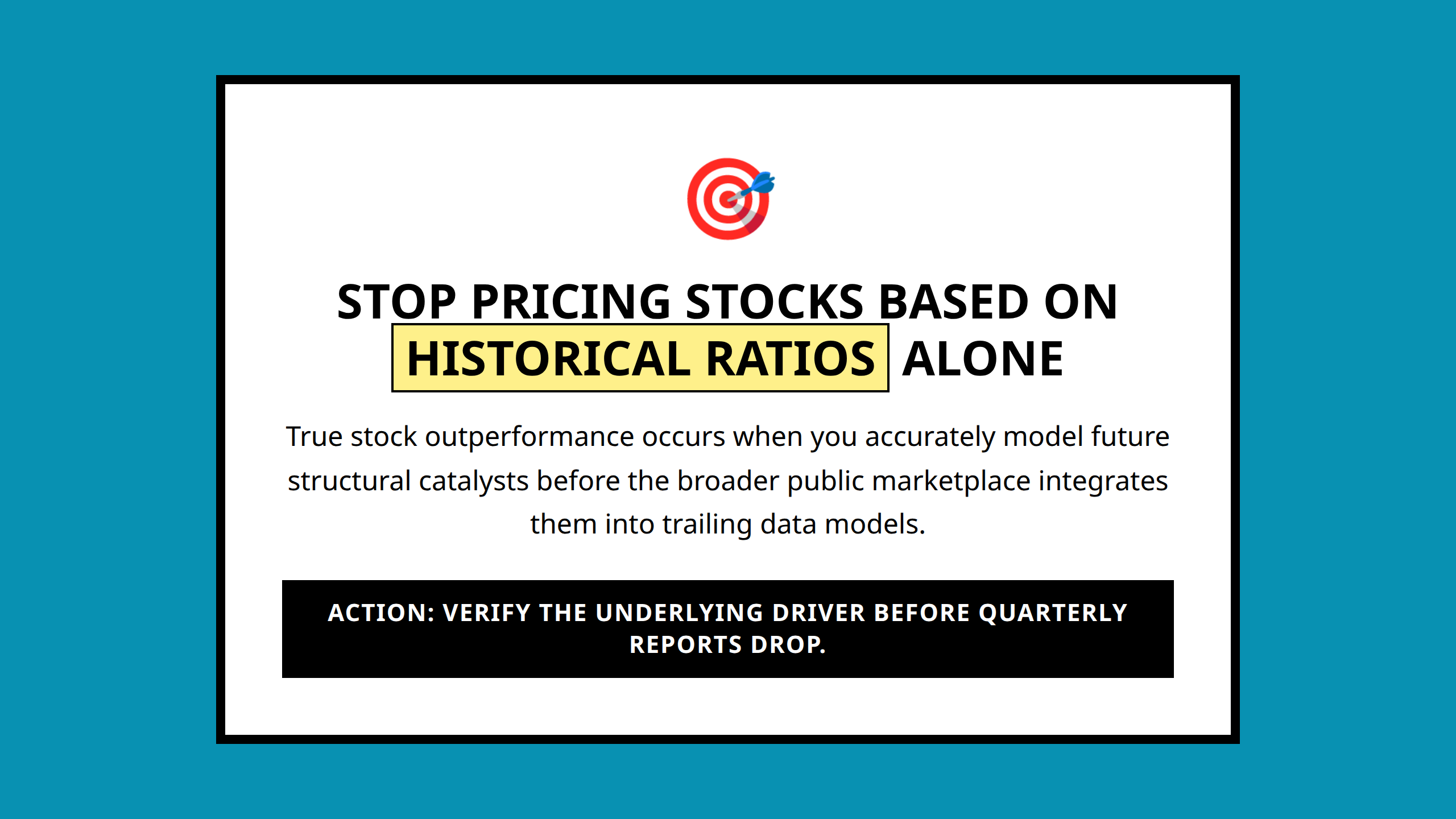
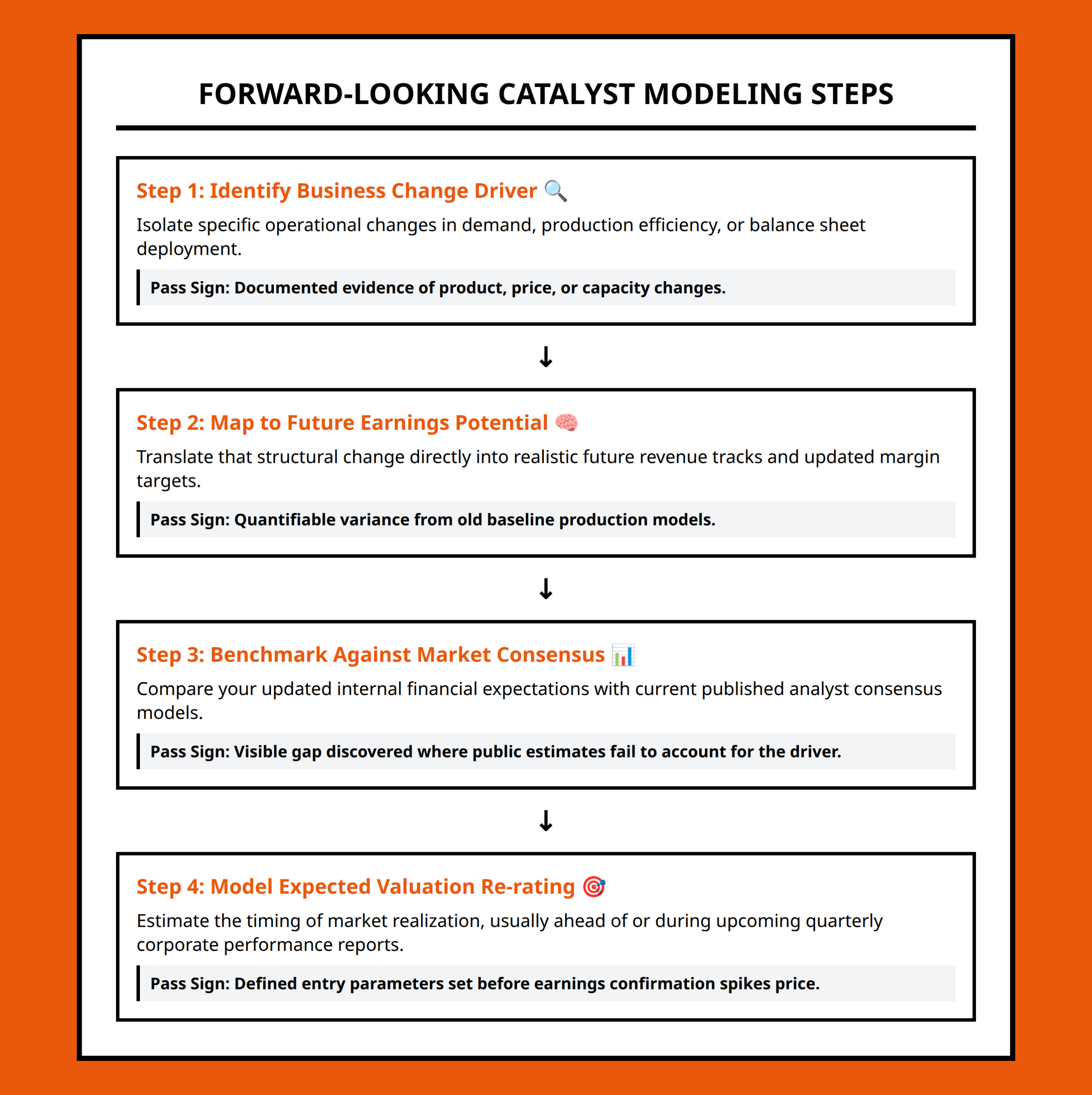
Disciplined investors often analyze catalysts by estimating how business changes could affect future financial performance before quarterly reports fully confirm the shift.
This does not require precise prediction. It involves building reasonable scenario frameworks.
For example, investors may ask:
- Could this new product improve margins over the next two years?
- Will operational efficiencies materially lower costs?
- Does management appear capable of executing the transition?
- Are analysts underestimating future demand durability?
- Has the market already priced in optimistic assumptions?
A practical example is how investors evaluate platform businesses expanding into subscription models. Reported earnings may initially look weaker because of transition costs, while long-term recurring revenue potential improves materially.
The key is not predicting exact quarterly outcomes. It is recognizing how future economics may evolve before consensus expectations adjust completely.
How to Evaluate Catalysts More Realistically
One of the biggest risks in catalyst analysis is becoming overly optimistic about uncertain future developments.
Strong investors usually balance opportunity with skepticism.
A practical evaluation framework may include:
- Identify the proposed catalyst clearly
- Determine how it changes future economics
- Estimate whether the change is temporary or durable
- Evaluate execution risks
- Assess whether the market already expects the improvement
This process helps prevent emotional investing driven purely by narratives or excitement.
I would avoid assuming every exciting development automatically creates investment opportunity. Some catalysts fail operationally, some take longer than expected, and some become fully priced into stocks long before the improvement materializes.
Why Catalysts Work Best Alongside Business Quality
Catalysts are most powerful when attached to durable businesses capable of executing successfully over time.
A weak business with temporary excitement may still struggle despite positive headlines. Meanwhile, a financially strong company with improving demand, disciplined management, and operational leverage may create more sustainable long-term upside when meaningful catalysts emerge.
This distinction matters because catalysts amplify existing business quality rather than replacing it entirely.
The practical advantage of catalyst-focused investing is not predicting headlines or reacting emotionally to quarterly earnings. It is identifying structural business changes early enough to understand how future expectations may shift before the broader market fully adjusts its valuation framework.
References:
- https://www.investopedia.com/terms/c/catalyst.asp
- https://www.tradestation.com/insights/2025/09/21/7-catalysts-stock-movement-2/
- https://www.levelfields.ai/news/how-to-profit-from-stock-market-catalysts
- https://www.barchart.com/story/news/34512930/when-markets-peak-catalysts-are-the-only-edge-that-matters
- https://www.jpmorgan.com/insights/outlook/market-outlook/contemplating-the-catalysts-five-market-movers
- https://www.venturasecurities.com/share-market-guide/all-about-share-stock-market/fundamental-analysis/what-are-stock-catalysts-drivers-for-stock-movement-explained/
- https://en.wikipedia.org/wiki/Stock_catalyst
- https://behaviouralinvestment.com/2024/05/01/the-curious-case-of-catalysts/
- https://www.redeye.se/research/888128/catalysts-events-that-trigger-a-positive-stock-price-move
- https://pintu.co.id/en/academy/post/catalysts-for-stock-trading-a-complete-guide-for-investors
- https://journalplus.co/strategies/catalyst-trading-strategy
- https://app.achievable.me/study/finra-series-66/learn/recommendations-and-strategies-efficient-market-hypothesis-emh
- https://www.fidelity.co.uk/markets-insights/markets/global/what-warren-buffett-says-and-does-when-markets-fall/
