One of the most uncomfortable realities about human judgment is that intelligence does not reliably protect people from bad decisions. In many situations, smart and capable people become exceptionally skilled at explaining away danger instead of confronting it.
That pattern appears repeatedly in emotionally charged environments where relationships, institutions, identity, and social stability matter more than objective evaluation. The warning signs are often visible early. The real problem is how people reinterpret those signs to avoid emotional disruption.
This distinction matters because delayed recognition rarely happens through simple ignorance. More often, it happens through gradual self-deception. People suppress discomfort, rationalize inconsistencies, minimize suspicion, and protect emotionally important narratives long after concern should have forced action.
The danger is not that intelligent people fail to notice warning signs. The danger is that they become psychologically motivated not to fully believe what they already notice.
Most Danger Signals Begin as Emotional Friction, Not Proof
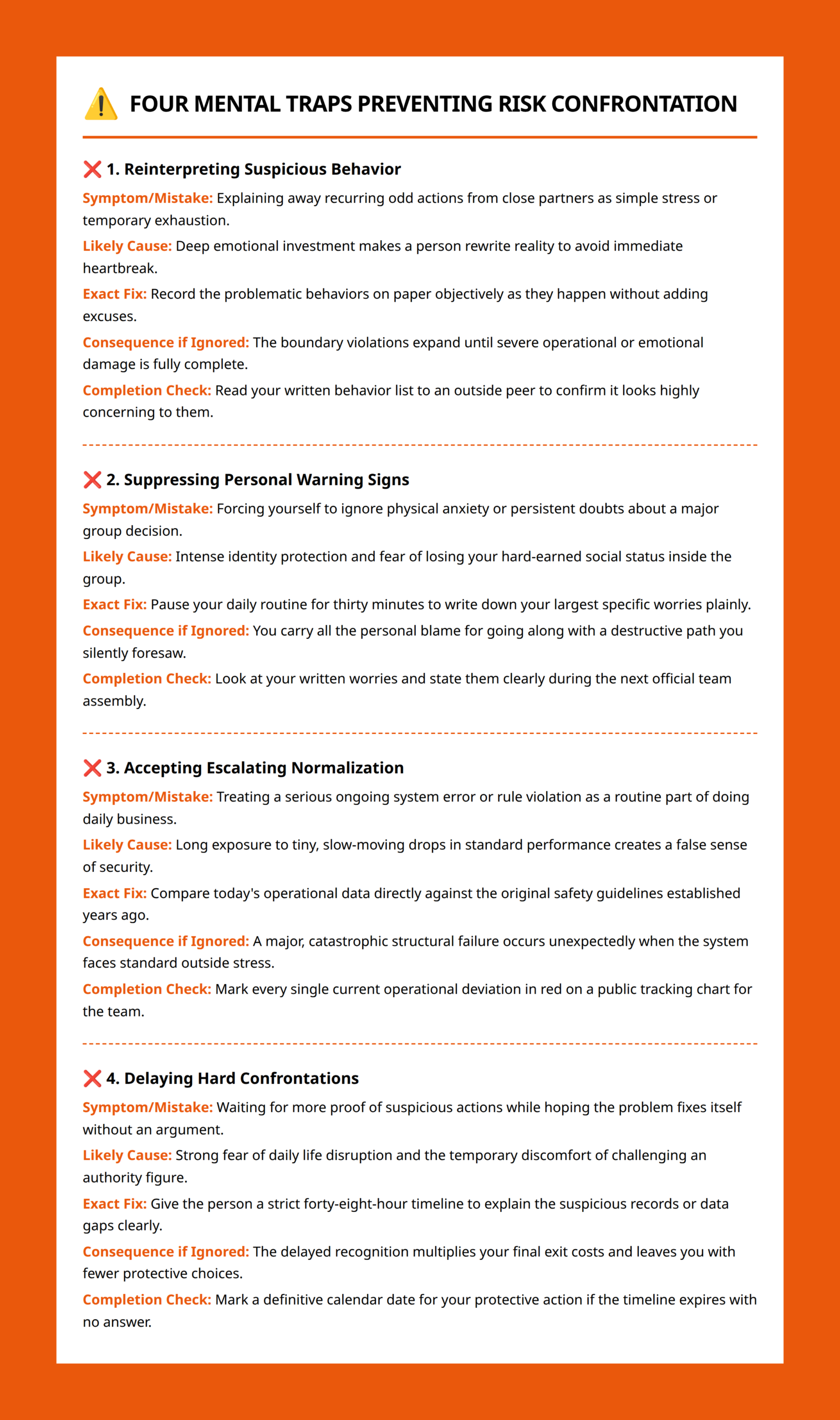
Early warning signs are usually ambiguous.
A conversation feels slightly wrong. Someone’s behavior creates unease. An explanation does not fully make sense. A pattern feels inconsistent. A situation produces lingering discomfort that people struggle to explain clearly.
At this stage, most people do not feel certain enough to act decisively.
That uncertainty becomes psychologically important because humans generally prefer stable interpretations of reality. Accepting that something may be dangerous often creates emotional consequences people want to avoid.
For example:
- accepting suspicion may threaten a valued relationship
- questioning authority may create social conflict
- challenging institutional trust may destabilize identity
- confronting uncomfortable truths may require difficult action
As a result, the brain often searches for safer explanations first.
I think many people imagine denial as obvious blindness, but in practice it usually looks much more intelligent and emotionally sophisticated. Rationalization often sounds calm, thoughtful, and reasonable while still moving a person further away from reality.
Rationalization Feels Safer Than Disruption
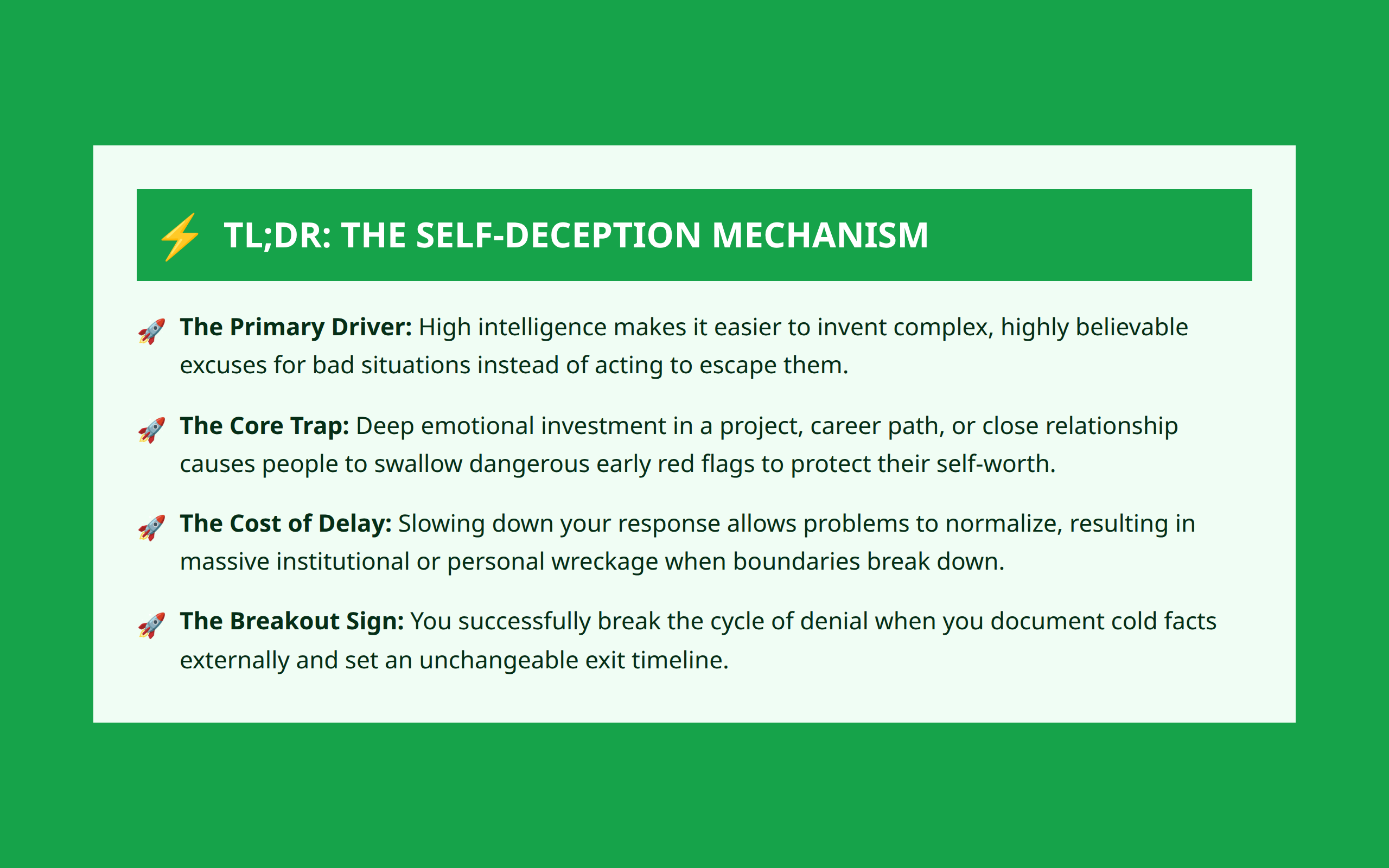
One of the strongest psychological forces in delayed recognition is the desire to preserve emotional stability.
When danger signals appear, people frequently begin negotiating internally between two competing needs:
- the need to recognize reality accurately
- the need to maintain emotional and social stability
That negotiation produces rationalization.
Instead of fully confronting the warning sign, people reinterpret it into something less threatening.
Common examples include:
| Warning Signal | Common Rationalization |
|---|---|
| Inconsistent behavior | “They are probably stressed.” |
| Disturbing social dynamics | “Maybe I misunderstood.” |
| Repeated discomfort | “I am overthinking this.” |
| Institutional secrecy | “There is likely a reasonable explanation.” |
| Suspicious authority behavior | “Someone else would have noticed already.” |
The important point is that these explanations often contain partial truth. That makes them psychologically convincing.
Rationalization becomes dangerous when it repeatedly overrides accumulating patterns instead of helping people evaluate them honestly.
Social Pressure Quietly Changes Risk Perception
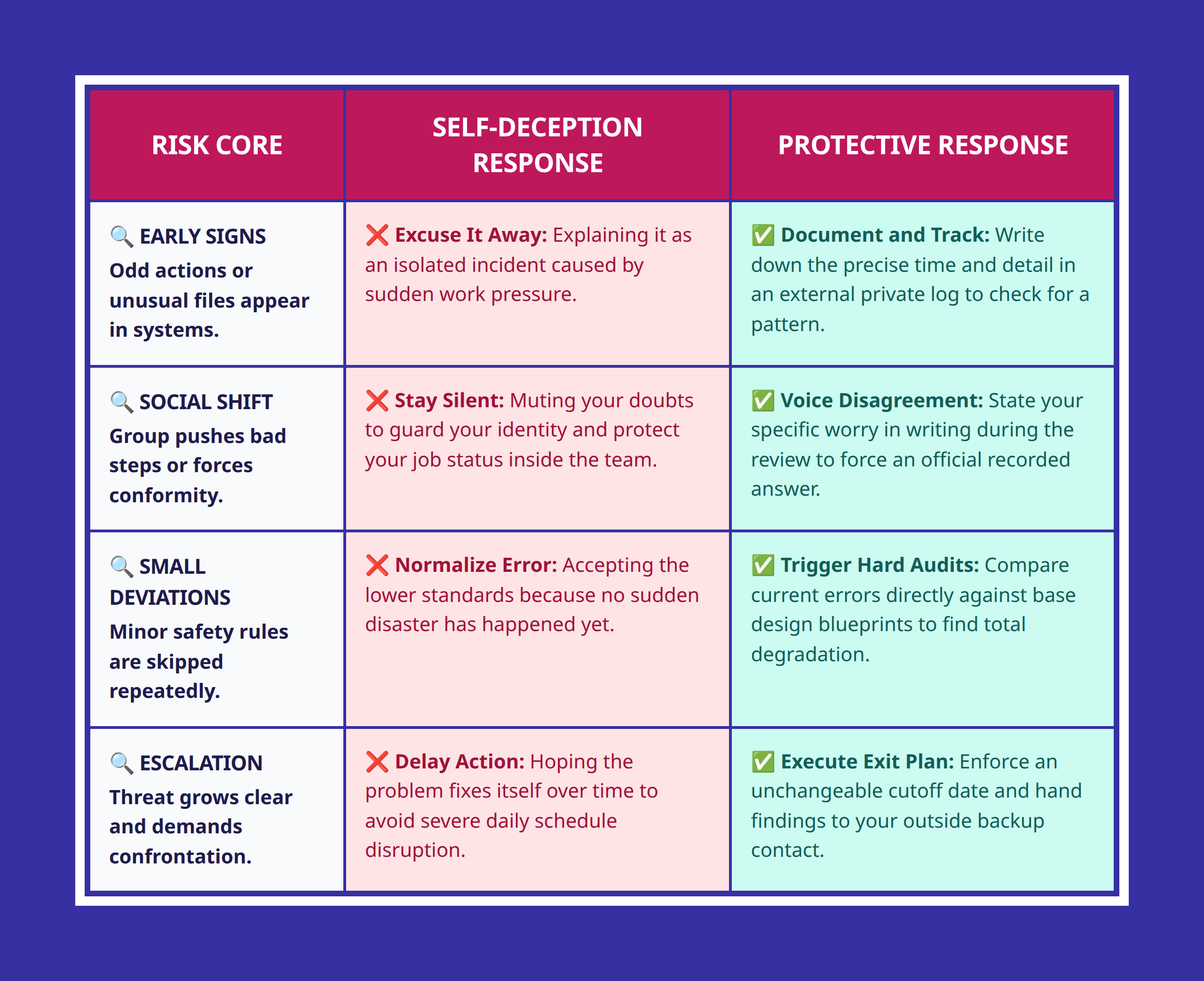
People rarely evaluate danger signals in isolation. Social context shapes interpretation constantly.
If peers, authority figures, institutions, or trusted communities appear unconcerned, individuals often begin doubting their own instincts.
This creates a powerful psychological effect:
If nobody else seems alarmed, the problem must not be serious.
That assumption becomes especially strong in prestige environments where institutions project confidence and stability.
A student questioning suspicious behavior inside a respected school, for example, may hesitate because everyone around them continues behaving normally. The social environment itself becomes evidence against their own concern.
I would think about this as a form of emotional outsourcing. People stop relying on direct perception and instead rely on collective social behavior to decide whether danger is real.
Normalization Happens Slowly Enough to Feel Reasonable
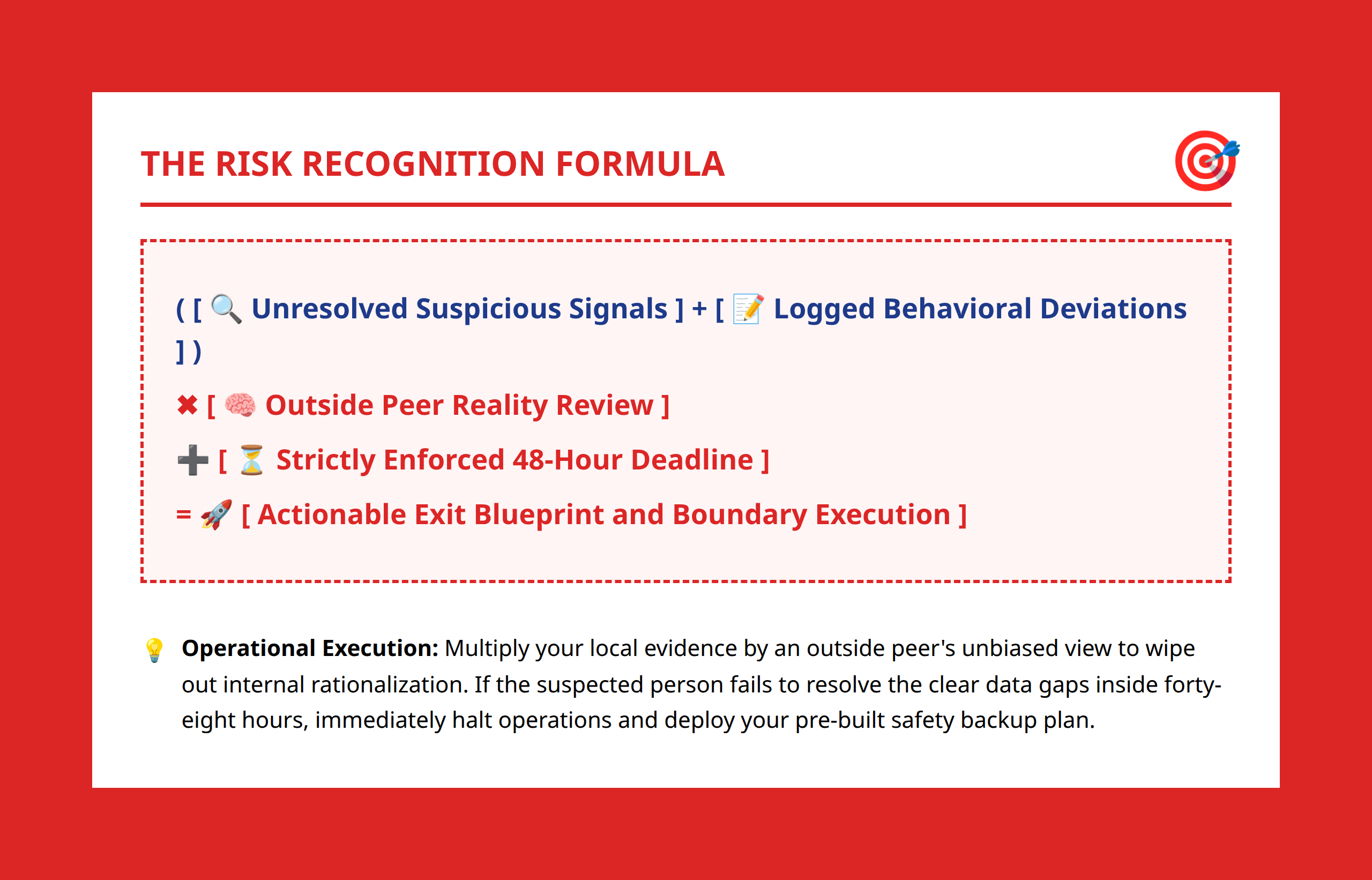
One reason intelligent people tolerate escalating problems is that normalization usually happens incrementally.
The situation changes slowly enough that each new step feels only slightly worse than the previous one.
This gradual escalation creates adaptation.
What initially felt shocking begins feeling familiar. What once seemed suspicious becomes part of the emotional background of daily life.
For example:
- A small inconsistency appears.
- The inconsistency repeats.
- Others behave as though it is normal.
- Questioning the pattern becomes socially uncomfortable.
- The individual adjusts psychologically to the new environment.
The dangerous part is that normalization changes emotional thresholds. People stop reacting to behaviors that would have disturbed them earlier.
This process is especially powerful inside tightly structured social systems where stability, loyalty, or reputation are heavily emphasized.
Identity Protection Can Override Good Judgment
People do not only protect relationships or institutions. They also protect their own self-image.
Recognizing danger sometimes requires admitting painful things:
- “I trusted the wrong person.”
- “I ignored warning signs.”
- “I defended something harmful.”
- “My judgment may have failed.”
Those realizations create psychological threat because they challenge personal identity.
Smart people are not immune to this problem. In some situations, intelligence increases the ability to construct emotionally protective explanations.
A highly analytical person may produce complex rational arguments for remaining passive while avoiding the simpler emotional truth that they are afraid of disruption.
I find this distinction useful because many discussions about danger signals focus entirely on external manipulation. Internal self-protection mechanisms are often just as important.
Why Institutions Encourage Delayed Recognition
Institutions often unintentionally reinforce denial because institutions prioritize continuity and stability.
When people raise uncomfortable concerns, authority systems frequently respond by minimizing uncertainty rather than escalating scrutiny immediately.
This can create several effects:
- concerned individuals feel socially isolated
- institutional calmness gets mistaken for safety
- people begin doubting their own perception
- warning signs become reframed as misunderstandings
The emotional pressure becomes even stronger when respected authority figures appear unconcerned publicly.
Many people unconsciously assume:
If the institution is not reacting strongly, the danger probably is not serious.
That assumption can delay recognition for long periods, especially when the institution itself has incentives to avoid disruption.
Three Questions That Help Clarify Whether You Are Rationalizing Danger
One practical way to interrupt self-deception is to examine how much emotional preservation is influencing interpretation.
1. Am I Evaluating the Pattern or Defending Stability?
People often focus more on preserving relationships, institutions, or emotional comfort than on evaluating repeated warning signs honestly.
2. Would I Interpret This Differently if It Happened to Someone Else?
Distance frequently makes danger easier to recognize because emotional investment decreases.
3. Have the Explanations Changed More Than the Behavior?
If the concerning behavior remains consistent while explanations become increasingly complicated, rationalization may already be taking over.
The Real Cost of Delayed Recognition
The most serious consequences of ignored warning signs usually emerge gradually rather than suddenly.
People lose confidence in their own perception. Institutions normalize harmful dynamics. Emotional stress accumulates quietly. Relationships become organized around avoidance instead of honesty.
By the time the danger becomes impossible to deny, individuals often realize they recognized pieces of the truth much earlier than they admitted openly.
The difficult lesson is that delayed recognition rarely happens because people are unintelligent. More often, it happens because human beings are deeply motivated to preserve emotional stability, social belonging, and coherent identity even when reality is already asking them to confront something painful.
References:
- https://medium.com/@RationalBadger/why-smart-people-fail-to-act-024d197077b0
- https://www.whiterivermanor.com/news/why-smart-driven-people-ignore-their-own-warning-signs/
- https://www.youtube.com/watch?v=HQp81V8ew18
- https://www.youtube.com/watch?v=UQOA3tXy8bE
- https://www.reddit.com/r/mensa/comments/1jgxfk0/why_are_people_of_higher_intelligence_looked_upon/
- https://www.reddit.com/r/mensa/comments/1jgxfk0/why_are_people_of_higher_intelligence_looked_upon/mj2vwey/
- https://www.reddit.com/r/productivity/comments/1l4xrzy/why_are_very_intelligent_people_often_paralyzed/
- https://www.reddit.com/r/NoStupidQuestions/comments/8j44sj/why_do_we_as_humans_ignore_warning_signs_so_often/
- https://www.quora.com/Why-do-highly-intelligent-and-capable-people-often-struggle-to-take-action-despite-having-clear-plans
- https://www.quora.com/Why-do-intelligent-people-often-take-risks-and-embrace-failure-and-how-does-this-mindset-benefit-them
- https://www.quora.com/What-makes-an-intelligent-person-follow-blindly-ignoring-any-of-the-facts-or-evidence-to-the-contrary
- https://medium.com/bouncin-and-behavin-blogs/the-hidden-psychology-behind-why-smart-people-make-terrible-decisions-240fb5531666
- https://www.linkedin.com/pulse/bad-mad-sad-why-smart-people-ignore-negativenews-nuala-walsh
- https://www.successunlimited-mantra.com/index.php/blog/the-intelligence-trap-why-smart-people-make-dumb-mistakes-and-how-to-stop
- https://www.verywellmind.com/an-overview-of-the-dunning-kruger-effect-4160740
- https://medium.com/illumination/the-dark-side-of-high-intelligence-97fad88ad446
- https://www.youtube.com/shorts/DD-E_hzdgeE
