People often imagine moral failure as a conscious decision to do something wrong. In reality, many ethical compromises begin much earlier, at the moment someone becomes afraid of being excluded.
That fear changes behavior in surprisingly powerful ways. A person who would normally resist cruelty, secrecy, humiliation, or harmful group behavior may slowly begin tolerating those things once belonging becomes emotionally necessary.
This is especially intense during adolescence, when social identity still feels unstable and peer approval carries enormous emotional weight. The need to remain accepted inside a social hierarchy can become strong enough to override personal discomfort, independent judgment, and even self-protection.
The important point is that most people do not experience this as deliberate corruption. They experience it as survival inside a social environment they cannot emotionally afford to lose.
Isolation Creates the Conditions for Moral Compromise
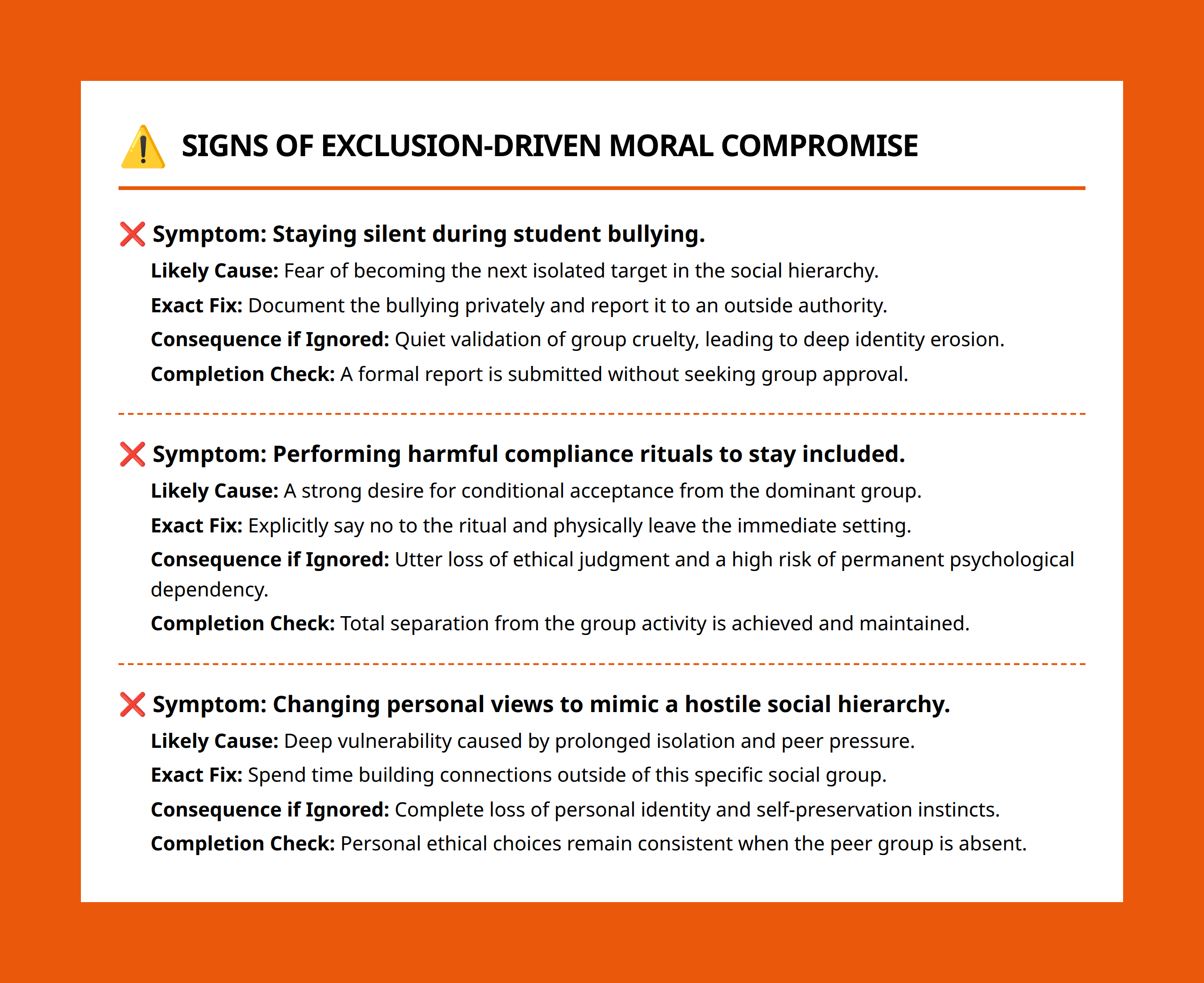
Fear of exclusion becomes psychologically powerful long before overt coercion appears.
A teenager who feels socially isolated may already be emotionally vulnerable because they are:
- trying to avoid humiliation
- seeking approval from peers
- afraid of becoming a target
- desperate to feel included
- uncertain about their own identity
Once belonging feels emotionally scarce, acceptance starts carrying disproportionate value.
This changes moral decision-making immediately. Instead of evaluating situations based only on personal ethics, individuals begin evaluating them based on social consequences.
For example, someone may privately feel uncomfortable with a humiliating group ritual while simultaneously thinking:
- “If I refuse, everyone will turn against me.”
- “Maybe this is normal here.”
- “I cannot afford to lose this group.”
I think many people underestimate how quickly loneliness alters ethical judgment. Social pain does not stay emotional for long. It starts reshaping behavior.
Social Hierarchies Teach People What Must Be Tolerated
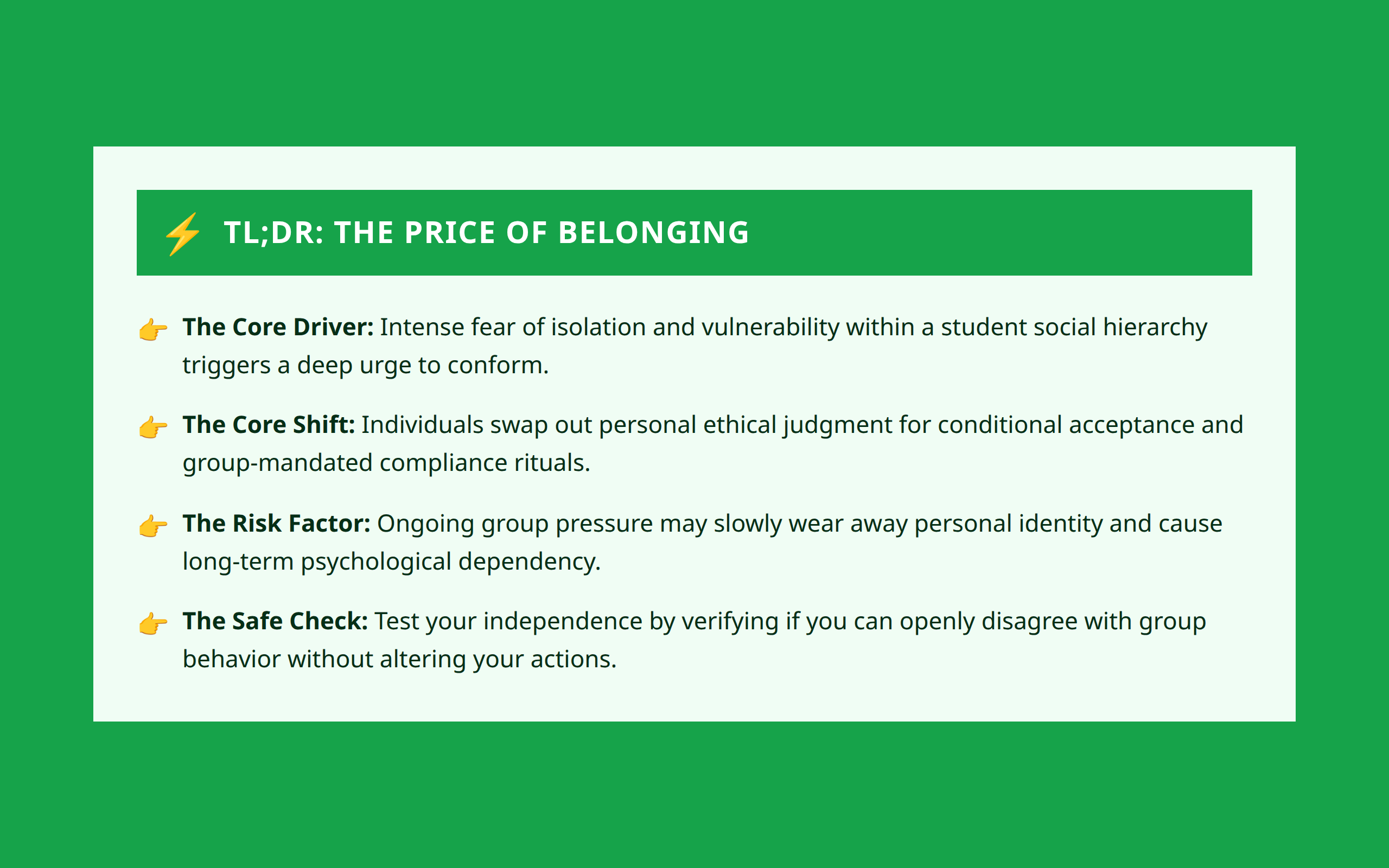
Most group environments develop informal hierarchies.
Some people gain status, influence, protection, or admiration, while others learn that acceptance depends on staying emotionally aligned with the group.
That hierarchy creates pressure in subtle ways:
| Social Pressure | Behavioral Effect |
|---|---|
| Fear of ridicule | Silence replaces disagreement |
| Desire for approval | Boundaries weaken |
| Status competition | Ethics become negotiable |
| Fear of isolation | Group behavior feels safer than independent judgment |
| Conditional acceptance | Loyalty becomes emotionally mandatory |
The key mechanism is not usually direct force. It is emotional conditioning.
People learn which behaviors increase belonging and which behaviors threaten it. Over time, the desire to remain socially safe begins shaping moral choices automatically.
This is why harmful group behavior often spreads quietly. Individuals may disagree privately while still participating publicly because social risk feels more immediate than ethical discomfort.
Conditional Acceptance Changes Personal Identity
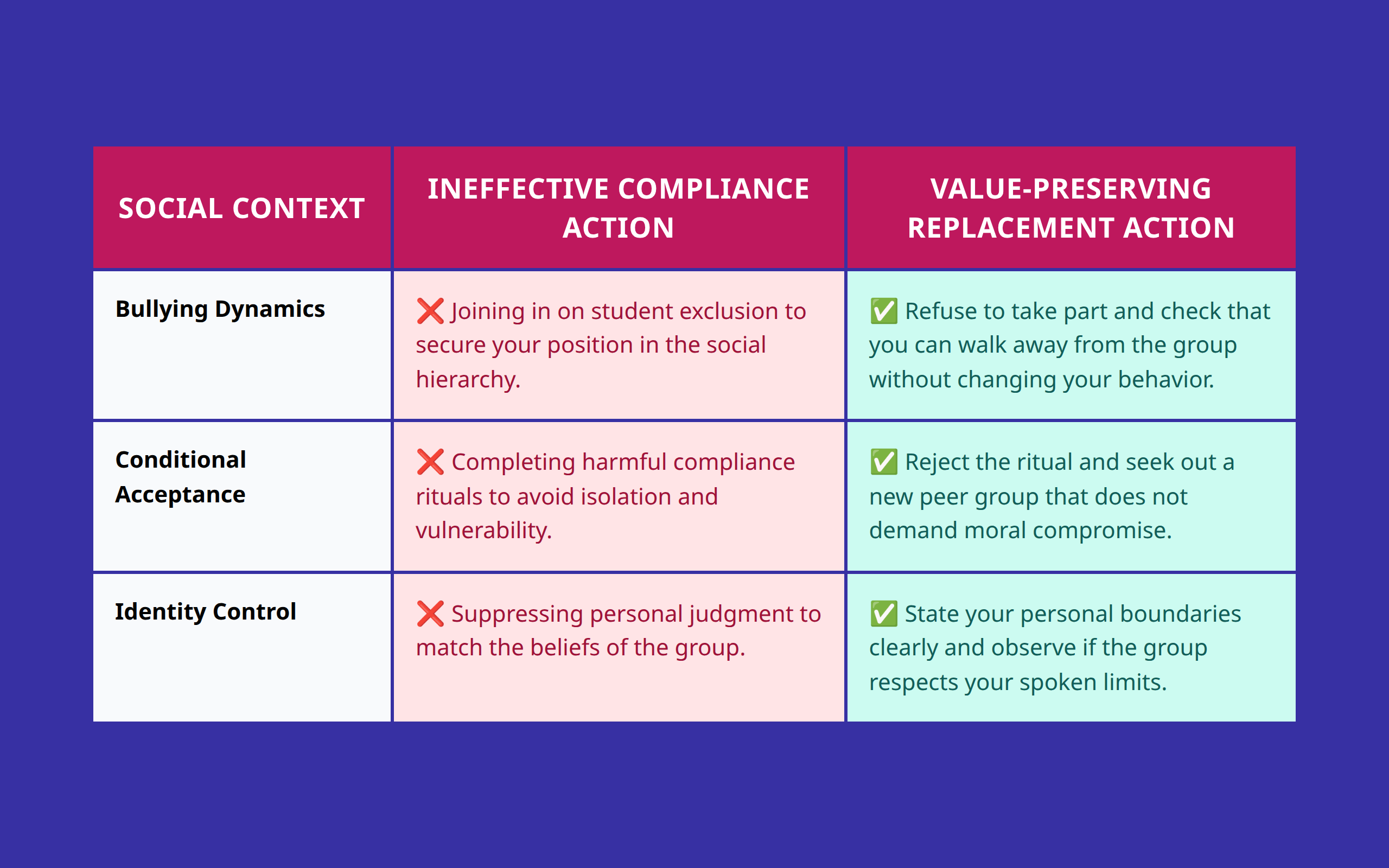
One of the most dangerous dynamics inside exclusion-based social systems is conditional acceptance.
Belonging no longer feels stable. It feels earned moment by moment through compliance.
That emotional instability creates dependency because the individual starts organizing behavior around maintaining group approval.
A teenager may begin:
- hiding personal doubts
- copying group behavior automatically
- laughing at things they dislike privately
- participating in rituals they fear
- avoiding friendships outside the group
The important shift is psychological.
The person stops asking:
“Is this right?”
and starts asking:
“What happens to me if I do not go along with this?”
I find this distinction especially important because people often assume ethical compromise requires malicious intent. In many situations, it begins with emotional dependency and fear of losing social protection.
Ritual and Shared Secrecy Intensify Group Loyalty
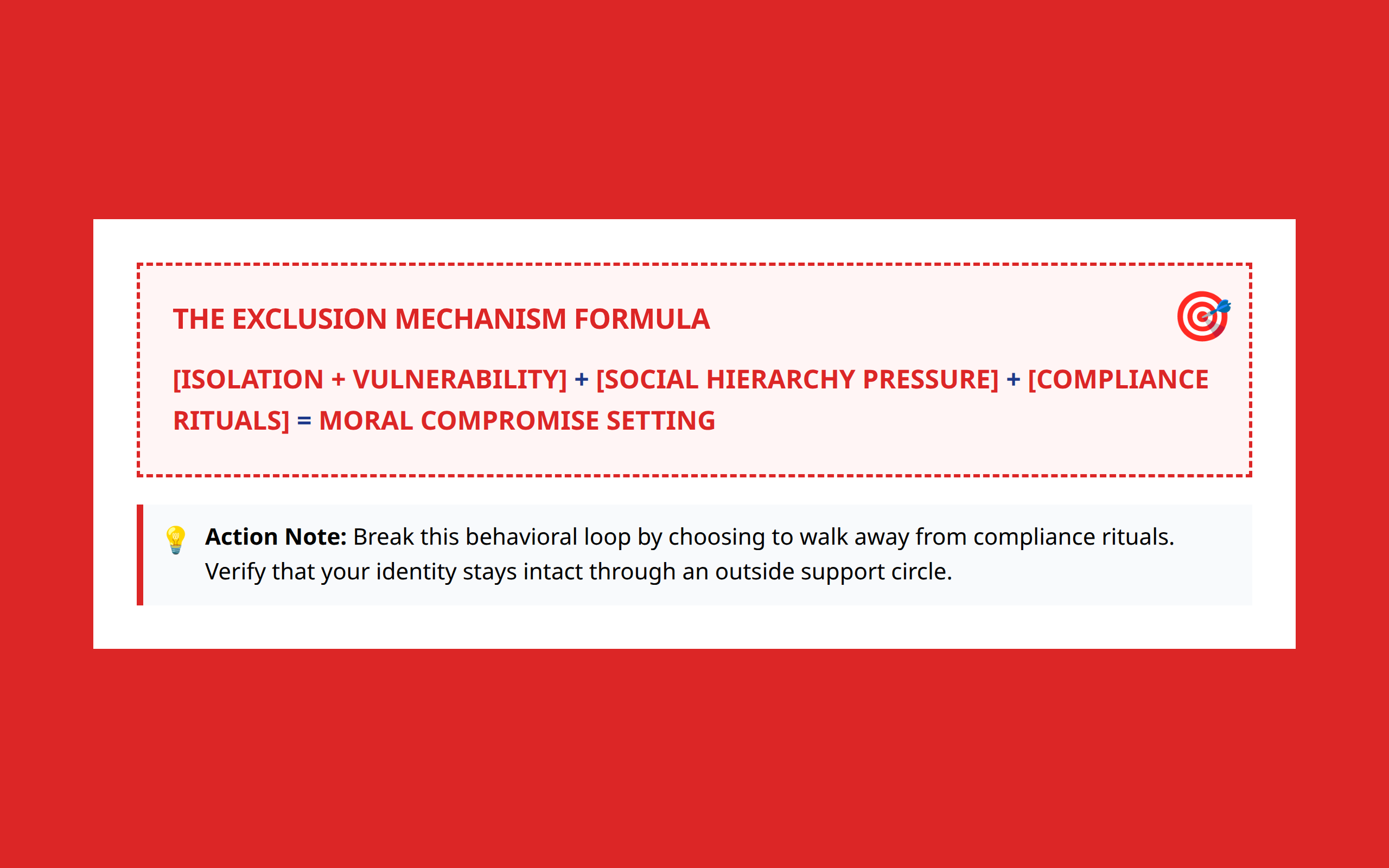
Groups become even more psychologically powerful when acceptance is reinforced through ritualized experiences.
Ritual changes how people interpret discomfort.
Without social framing, humiliation or fear may feel obviously harmful. Once wrapped inside initiation, exclusivity, or tradition, the same experience can start feeling meaningful or necessary.
This creates several effects simultaneously:
- Members become emotionally bonded through shared experience.
- Outsiders appear increasingly distant.
- Discomfort becomes normalized.
- Group loyalty becomes tied to endurance.
- Silence begins feeling morally expected.
One subtle but important consequence is that shared secrecy strengthens attachment even when the experience itself feels frightening.
The individual may think:
- “Only we understand this.”
- “Other people would not get it.”
- “Leaving now would make everything meaningless.”
That emotional logic makes withdrawal psychologically difficult even when warning signs become obvious.
Why People Defend Harmful Groups They Secretly Fear
People inside exclusion-driven environments often become defenders of systems they privately dislike.
At first glance, this can look irrational. But psychologically, the behavior makes sense.
Once someone sacrifices personal comfort, moral certainty, or emotional safety to remain accepted, admitting the group is harmful creates painful consequences:
- their sacrifices lose meaning
- their identity becomes unstable
- their social protection feels threatened
- their earlier compliance becomes harder to justify
As a result, people often protect the group narrative even while feeling internally conflicted.
I would think about this as emotional self-preservation. Defending the group becomes easier than confronting the possibility that belonging required moral compromise all along.
Three Signs That Fear of Exclusion Is Reshaping Moral Judgment
Not every close social group is unhealthy. Strong communities naturally influence behavior. The warning signs appear when fear becomes the primary organizing force behind belonging.
1. Silence Feels Safer Than Honesty
When people consistently suppress discomfort to avoid rejection, ethical independence is already weakening.
2. Group Approval Starts Defining Personal Worth
If acceptance feels emotionally necessary for self-esteem, individuals become much more vulnerable to compliance pressure.
3. Moral Boundaries Shift Gradually Over Time
One of the clearest danger signs is noticing that behaviors once considered unacceptable now feel normal because the social environment repeatedly rewards them.
The Most Powerful Pressure Is Often the Fear of Becoming Alone Again
Fear of exclusion is not only about losing popularity. In many cases, it is about losing emotional safety, identity, protection, and belonging all at once.
That is why intelligent, empathetic, and otherwise ethical people can become involved in behaviors they would normally reject. The social cost of resistance begins feeling larger than the moral cost of participation.
The difficult lesson is that moral compromise rarely starts with cruelty. More often, it starts with the quiet fear that refusing the group may leave someone isolated, vulnerable, and completely alone again.
References:
- https://pmc.ncbi.nlm.nih.gov/articles/PMC6085085/
- https://mrspublisher.com/assets/articles/1758215422.pdf
- https://openaccess.wgtn.ac.nz/articles/thesis/Fear_Deciding_Fate_How_Fear_Influences_Moral_Decision-Making/17144318
- https://www.sciencedirect.com/science/article/pii/S0001691825012867
- https://www.apa.org/monitor/2012/04/rejection
- https://pmc.ncbi.nlm.nih.gov/articles/PMC11846755/
- https://psychology.northwestern.edu/documents/faculty-publications/molden-rejected.pdf
- https://routledgeopenresearch.org/articles/2-4
- https://bugmybarbook.org.au/wp-content/uploads/2023/07/BBB-Social-Exclusion-chapter.pdf
- https://www.harperwest.co/self-acceptance/five-factors/2-social-exclusion/
- https://pmc.ncbi.nlm.nih.gov/articles/PMC11200531/
- https://en.wikipedia.org/wiki/Social_exclusion
- https://www.scitechnol.com/peer-review/fear-and-decision-making-how-fear-affects-risk-assessment-and-behavioral-choices-J8lr.php
