When investors try to analyze too many industries, they risk making poorly informed decisions. By narrowing focus to sectors and business models you genuinely understand, you can improve the quality of your investments and reduce avoidable mistakes.
Understanding Your Circle of Competence
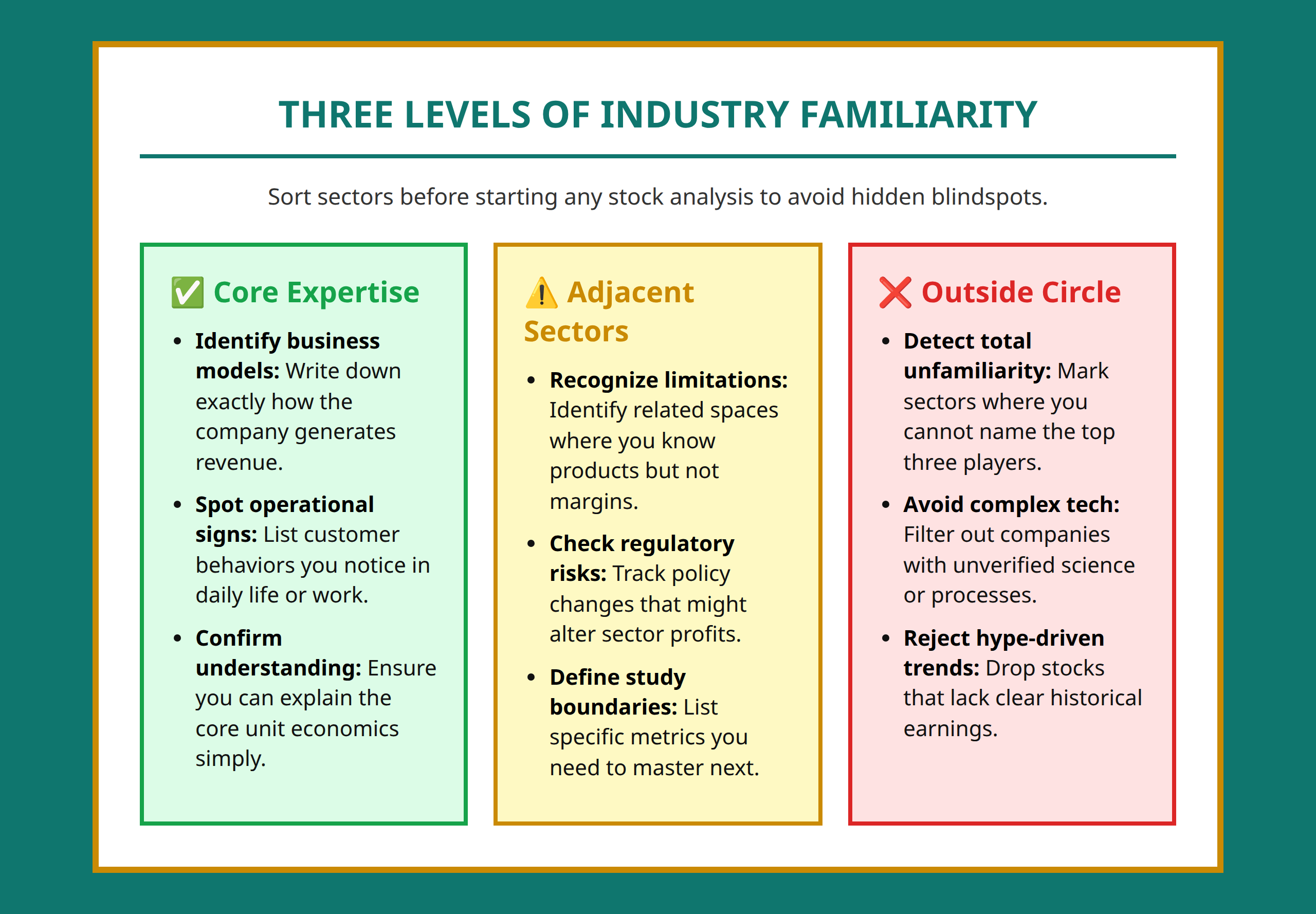
The concept of a “circle of competence” emphasizes that each investor has a limited set of industries or business models they understand deeply. Attempting to invest outside this circle often results in misinterpretation of trends, misjudged competitive landscapes, and overconfidence in areas where real expertise is lacking.
I find it helpful to ask: “Could I explain this industry and its key businesses clearly to someone else?” If the answer is no, that industry likely falls outside your circle of competence.
Why Narrowing Focus Matters
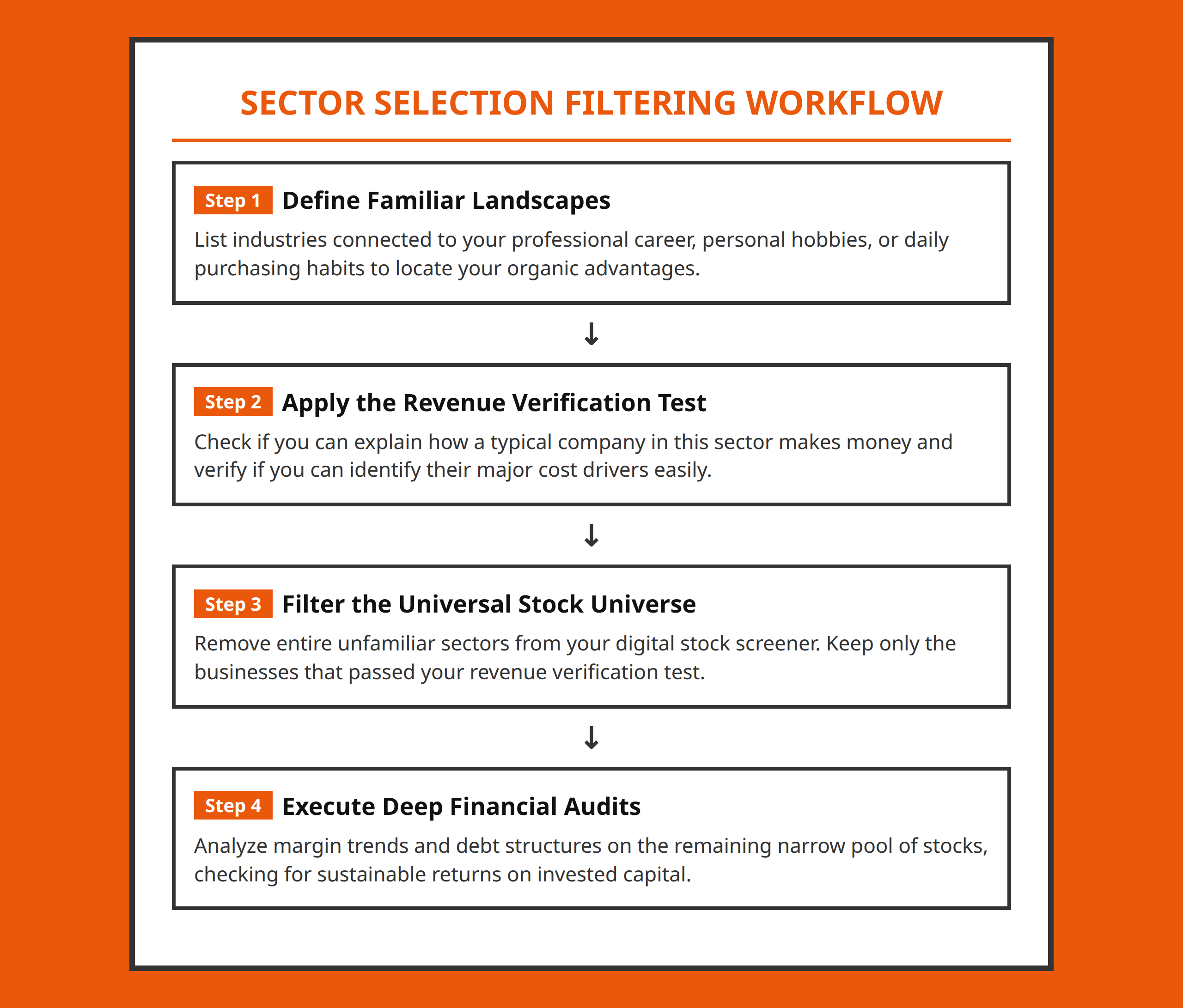
Limiting investment analysis to familiar industries helps in several ways:
- Improved decision quality: Understanding industry dynamics reduces the likelihood of misreading a company’s position or competitive advantages.
- Faster research process: Familiarity allows quicker assessment of companies’ strategies, financials, and risks.
- Reduced reliance on luck: Concentrating on areas you understand minimizes errors caused by guessing or following trends blindly.
A practical observation is that many investors spread themselves too thin across sectors, believing diversification alone is sufficient. In reality, focusing on your strengths first ensures that each investment is supported by informed judgment.
How to Identify Your Competence Areas
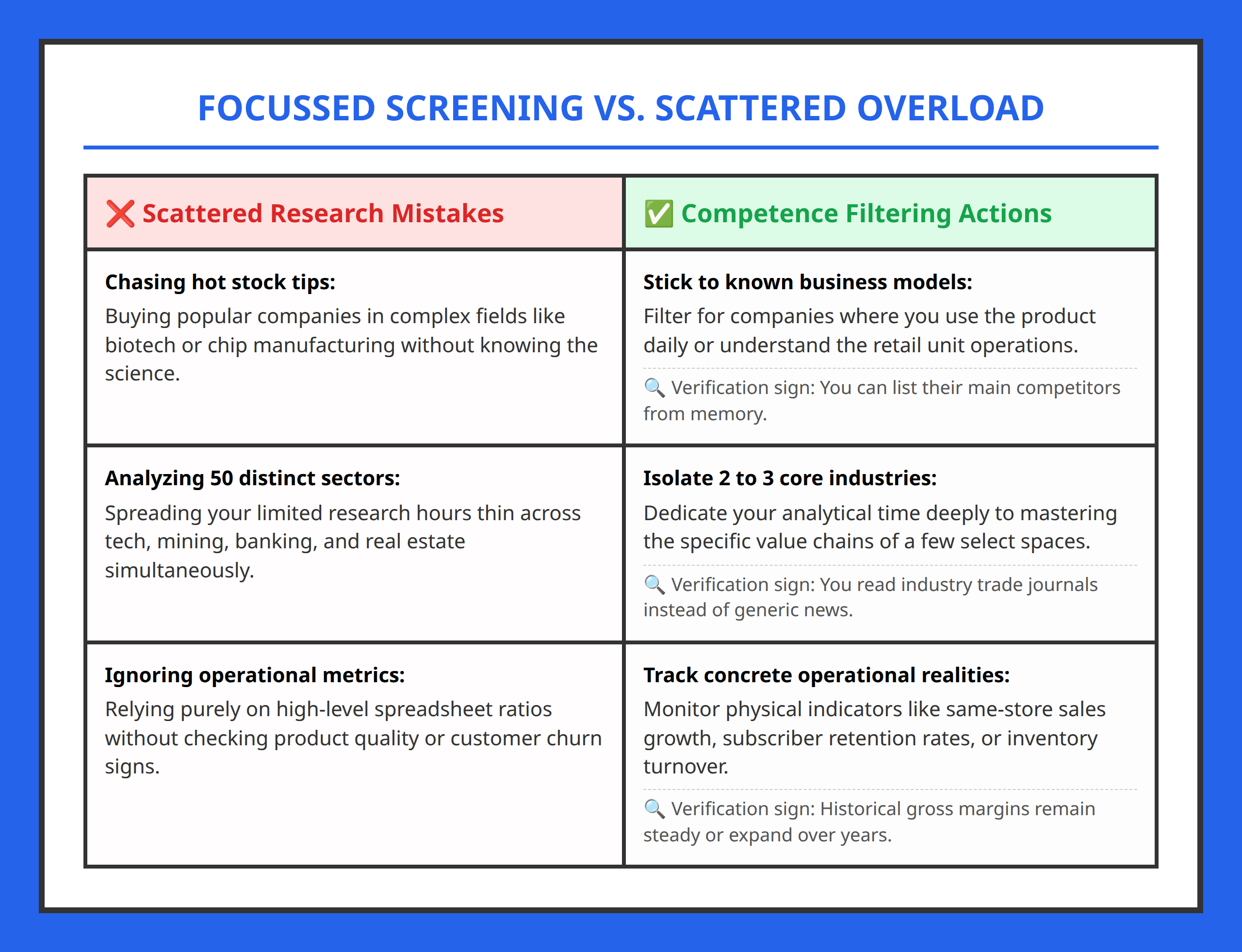
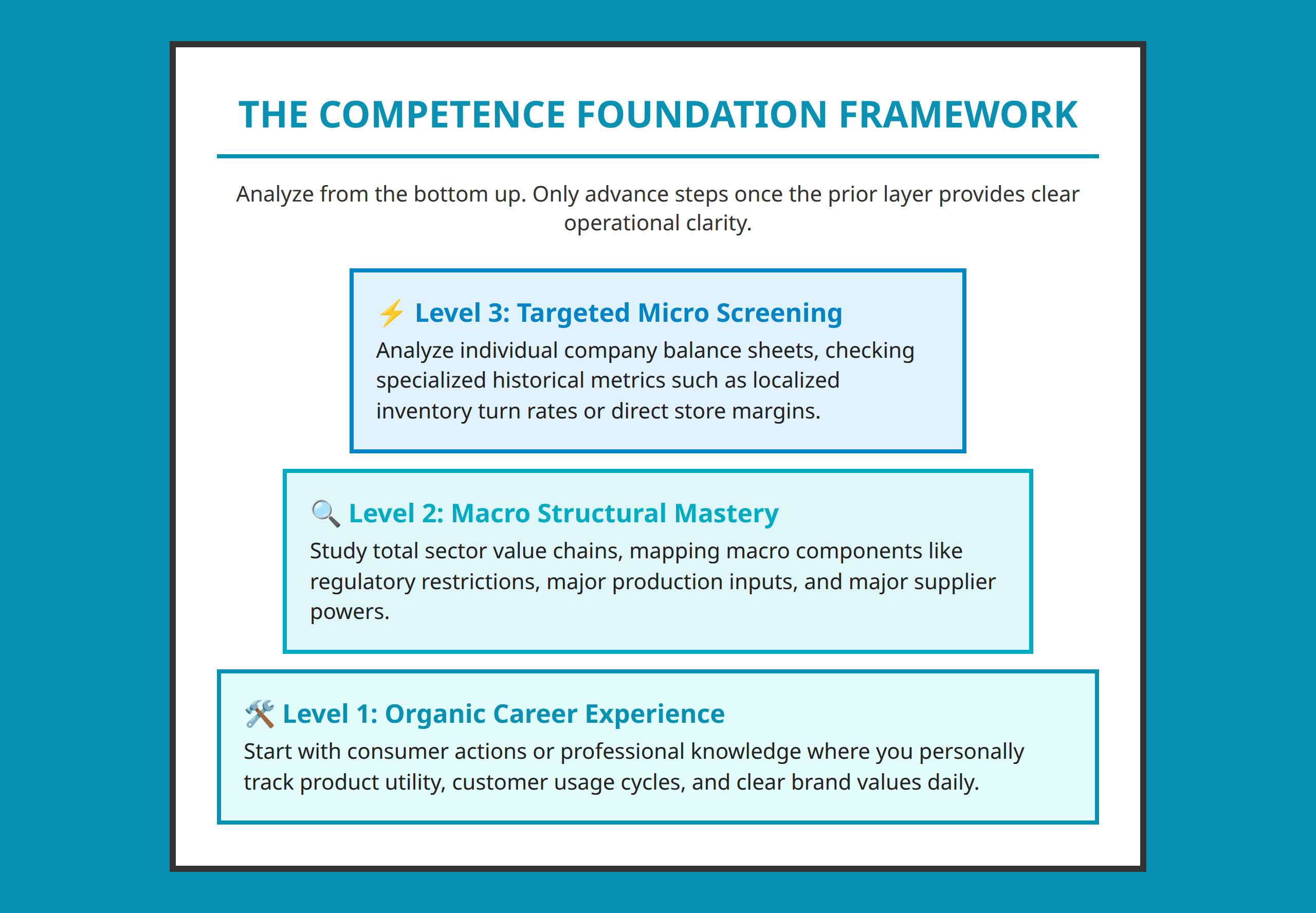
Start by cataloging industries where you have relevant experience or education. Consider past work experience, hobbies, or personal study that has given you unique insights. For example, someone with a technology background may naturally grasp software business models faster than industrial manufacturing.
Next, evaluate each sector for depth of knowledge. Ask yourself:
- Can I identify the main competitive pressures?
- Do I understand key drivers of revenue and profitability?
- Can I assess the sustainability of business models within this industry?
Industries where you cannot confidently answer these questions may fall outside your current circle of competence. These are areas to approach cautiously or avoid entirely.
Applying the Circle of Competence in Stock Screening
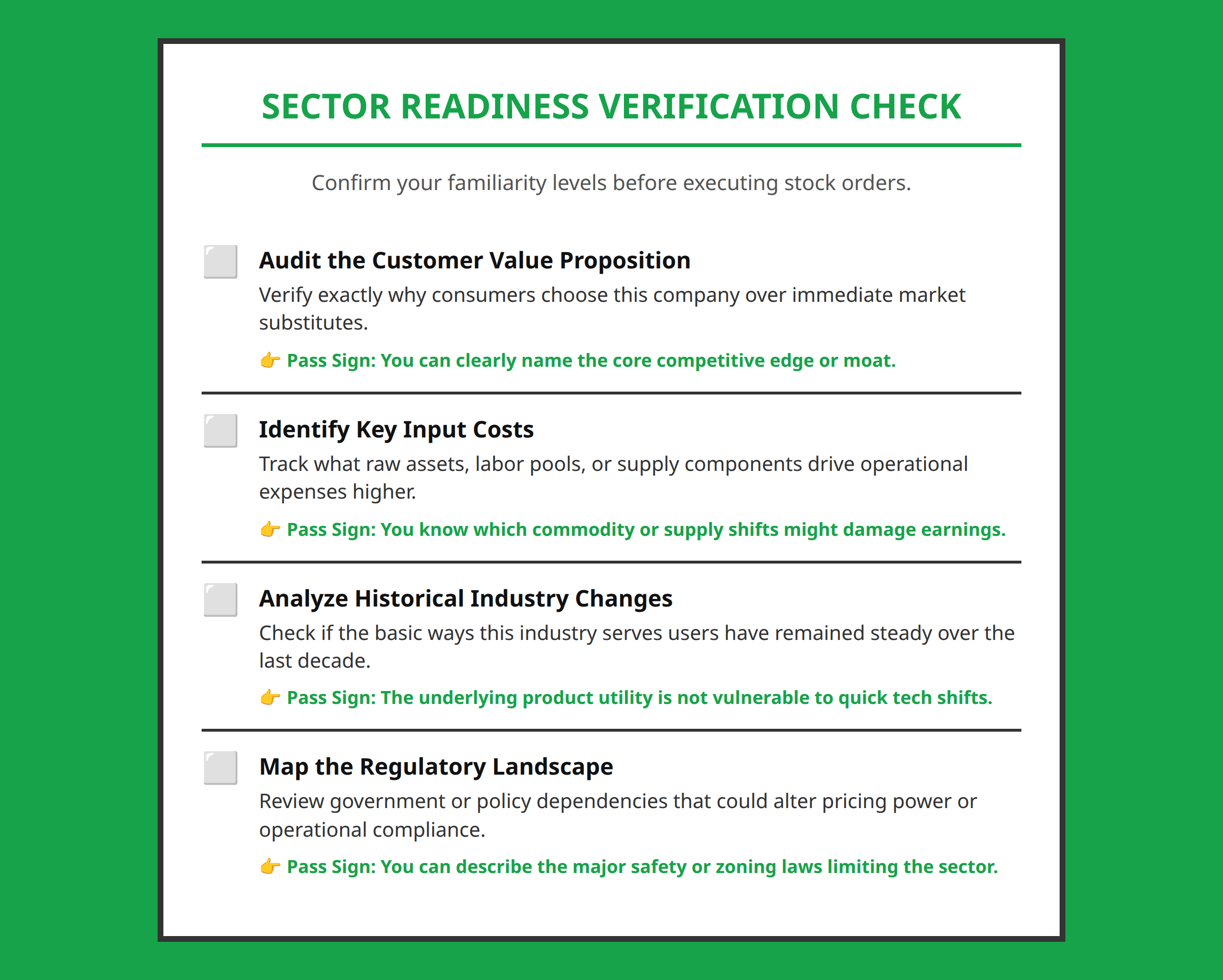
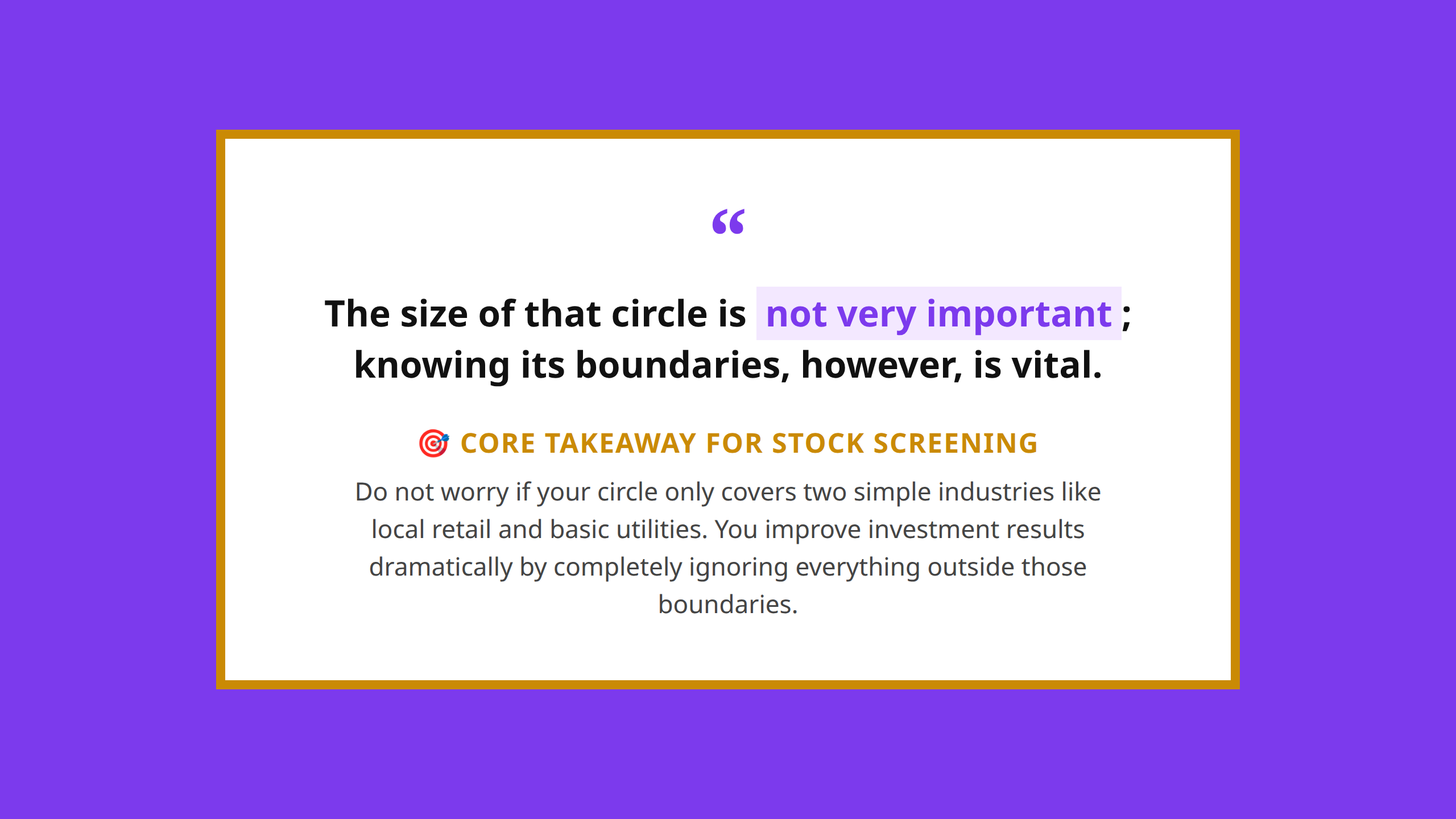
Once you define your competence areas, use them as a filter for investment opportunities. Screening should prioritize companies in familiar sectors, allowing more informed judgment on quality and risk.
For example, an investor skilled in healthcare might focus on pharmaceuticals and medical devices, quickly recognizing which companies have durable competitive advantages, regulatory hurdles, or pipeline potential. Outside industries like energy or automotive may present risks the investor cannot fully evaluate.
Practical Steps to Maintain Your Competence Edge
- Continuous learning: Even within your circle, industries evolve. Stay current on market trends, technological changes, and competitive shifts.
- Reassess boundaries: Periodically evaluate whether your knowledge has expanded enough to add new sectors without compromising judgment.
- Document rationale: Keep notes on why a sector is within your competence and why specific companies are attractive. This reinforces disciplined decision-making.
Following these steps ensures your investments remain grounded in informed understanding rather than speculation.
Key Takeaways
Investors improve their decision quality when they:
- Focus only on industries and business models they deeply understand.
- Use their circle of competence as a primary filter in stock screening.
- Regularly reassess and update their knowledge to expand competence safely.
Concentrating on areas of expertise reduces errors, increases analytical speed, and helps build confidence in each investment choice.
References:
- https://www.ruleoneinvesting.com/blog/podcast/how-the-circle-of-competence-helps-you-invest-with-confidence/
- https://fs.blog/circle-of-competence/
- https://www.investopedia.com/warren-buffett-s-investing-rule-that-could-change-your-financial-future-11947169
- https://einvestingforbeginners.com/circle-of-competence-daah/
- https://acquirersmultiple.com/2024/02/li-lu-how-to-master-your-circle-of-competence-buffetts-guide/
- https://www.reddit.com/r/ValueInvesting/comments/1lv91k9/circle_of_competence/
- https://www.reddit.com/r/ValueInvesting/comments/153me1g/questions_to_answer_to_know_your_circle_of/
- https://pictureperfectportfolios.com/inside-warren-buffetts-circle-of-competence-concept/
- https://nesslabs.com/circle-of-competence
- https://www.linkedin.com/posts/sachin-gupta-65376a191_most-investors-want-to-grow-their-knowledge-activity-7402325108838572032-XUEM
- https://modelthinkers.com/mental-model/circle-of-competence
- https://www.home.saxo/learn/guides/trading-strategies/how-emotions-can-influence-your-investment-decisions
