A surprising number of retail investors believe they are making long-term investment decisions when they are actually participating in short-term speculation. The confusion happens because both activities involve buying stocks, both can produce profits, and both operate inside the same market. But the underlying mindset, decision process, risk profile, and relationship to price movement are fundamentally different.
This distinction matters more than many people realize because speculative behavior often feels intelligent during strong market environments. Rising prices create confidence, social proof, and emotional reinforcement. Investors begin believing they understand businesses when they are mostly reacting to momentum and crowd psychology.
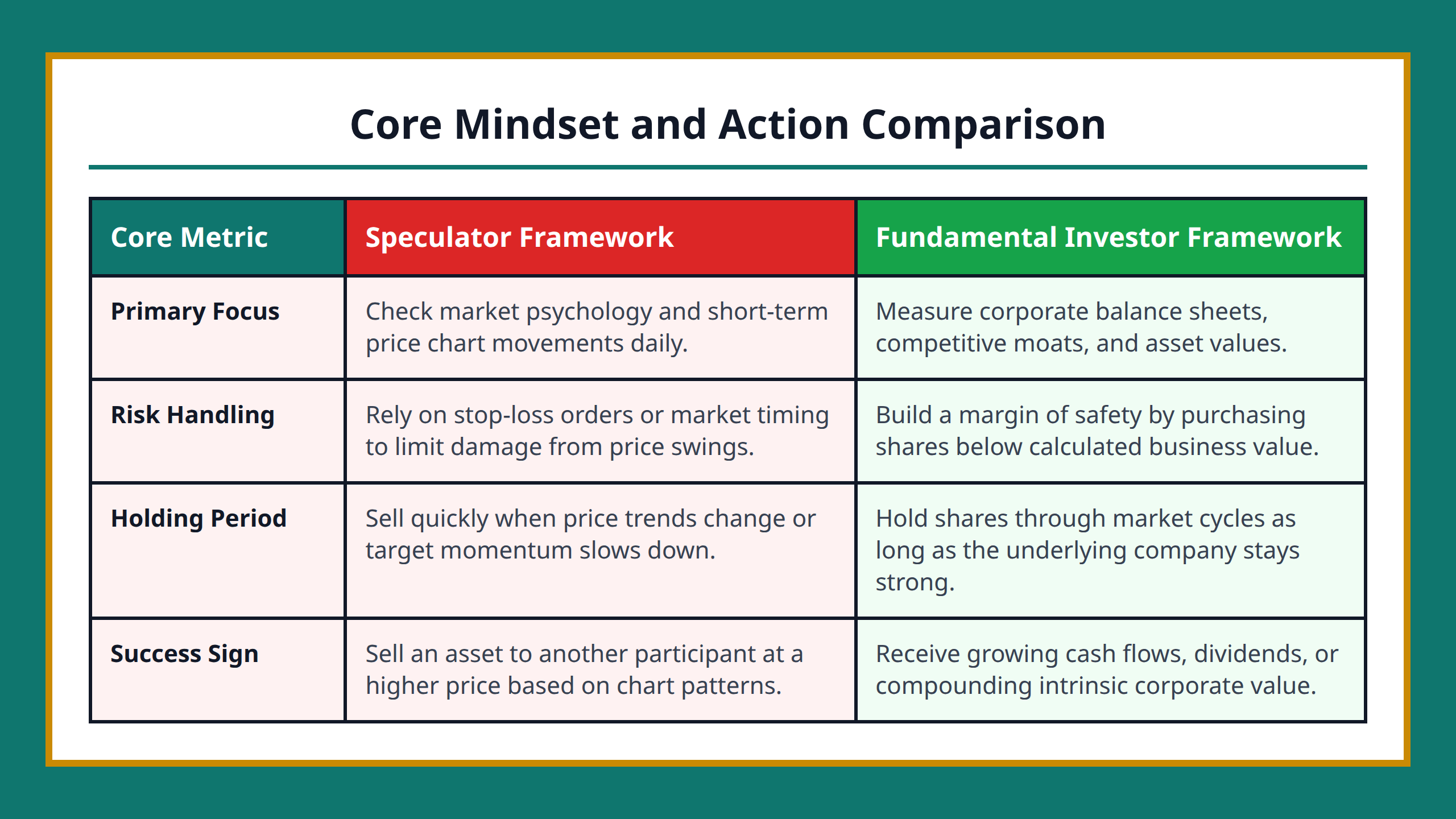
I would think about it this way: speculation primarily depends on predicting what other market participants will do next, while fundamental investing depends on understanding what a business is actually worth over time.
Why the Line Between Speculation and Investing Became Blurry
Modern stock culture often treats all market participation as “investing,” even when the behavior is heavily driven by price action, hype cycles, social momentum, or short-term excitement.
For example, many investors now enter positions because:
- A stock is trending aggressively upward
- Social media enthusiasm is accelerating
- Fear of missing out becomes emotionally overwhelming
- Recent gains create the illusion of certainty
- Short-term momentum appears easier than business analysis
The important issue is not that short-term trading exists. Markets naturally include traders, speculators, hedgers, long-term investors, and institutions with different objectives. The real problem appears when speculative behavior is mistaken for disciplined investing.
I find this distinction useful because investors often underestimate how much their decisions are influenced by recent price movement rather than business understanding.
What Speculation Actually Depends On
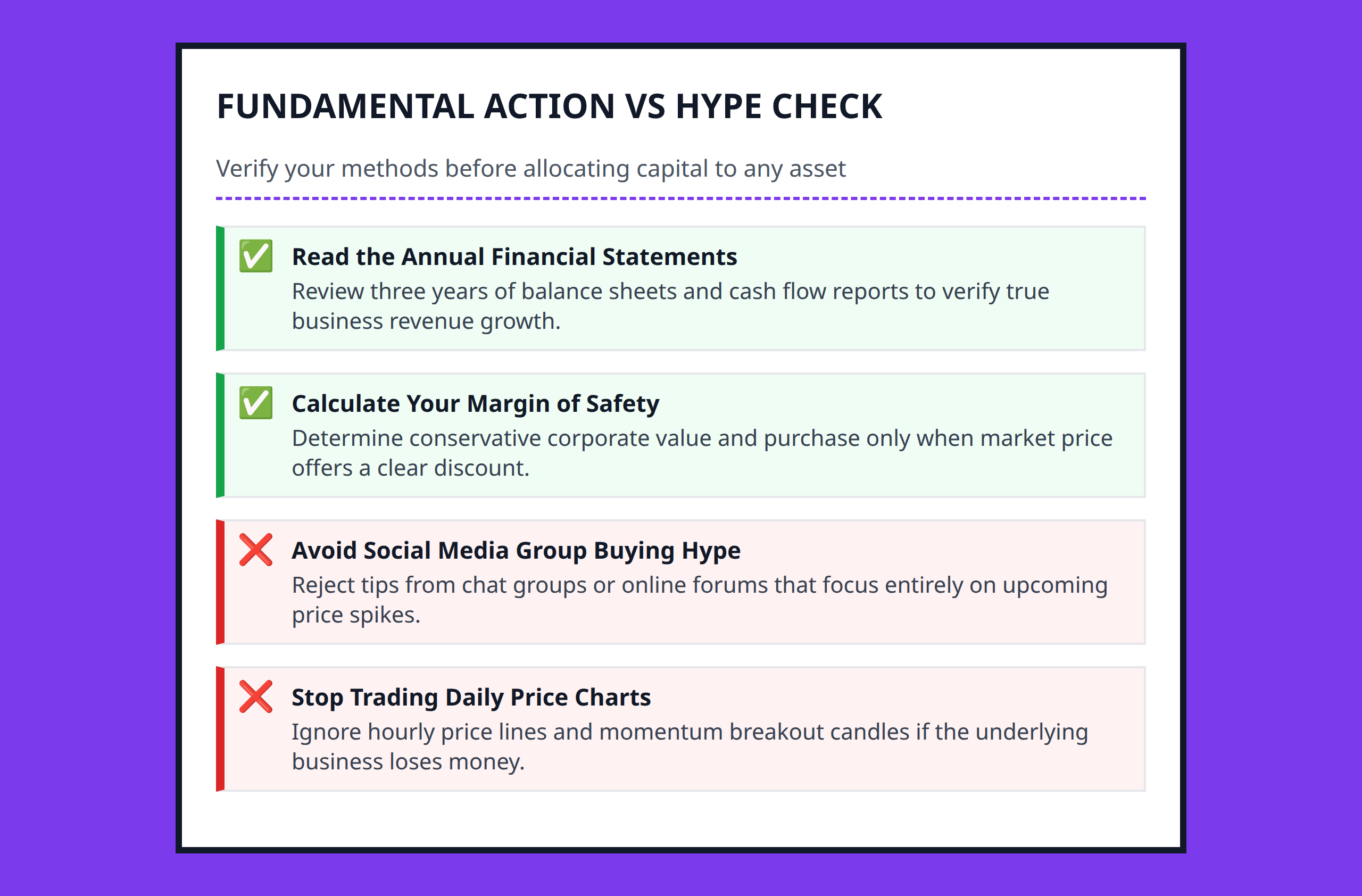
Speculation is heavily tied to expectations about future price movement. The central focus is often:
- Momentum
- Market sentiment
- Narrative strength
- Short-term psychology
- Timing
- Crowd behavior
A speculator may buy a stock without deeply understanding:
- The company’s competitive position
- Its long-term earnings power
- Industry durability
- Balance-sheet quality
- Capital allocation
- Business risks
The core assumption is usually that someone else will buy the stock later at a higher price.
That does not automatically make speculation irrational. Speculative markets can remain profitable for extended periods. But the profit mechanism differs substantially from fundamental investing because success depends more heavily on market psychology than underlying business value.
What Fundamental Investing Focuses On Instead
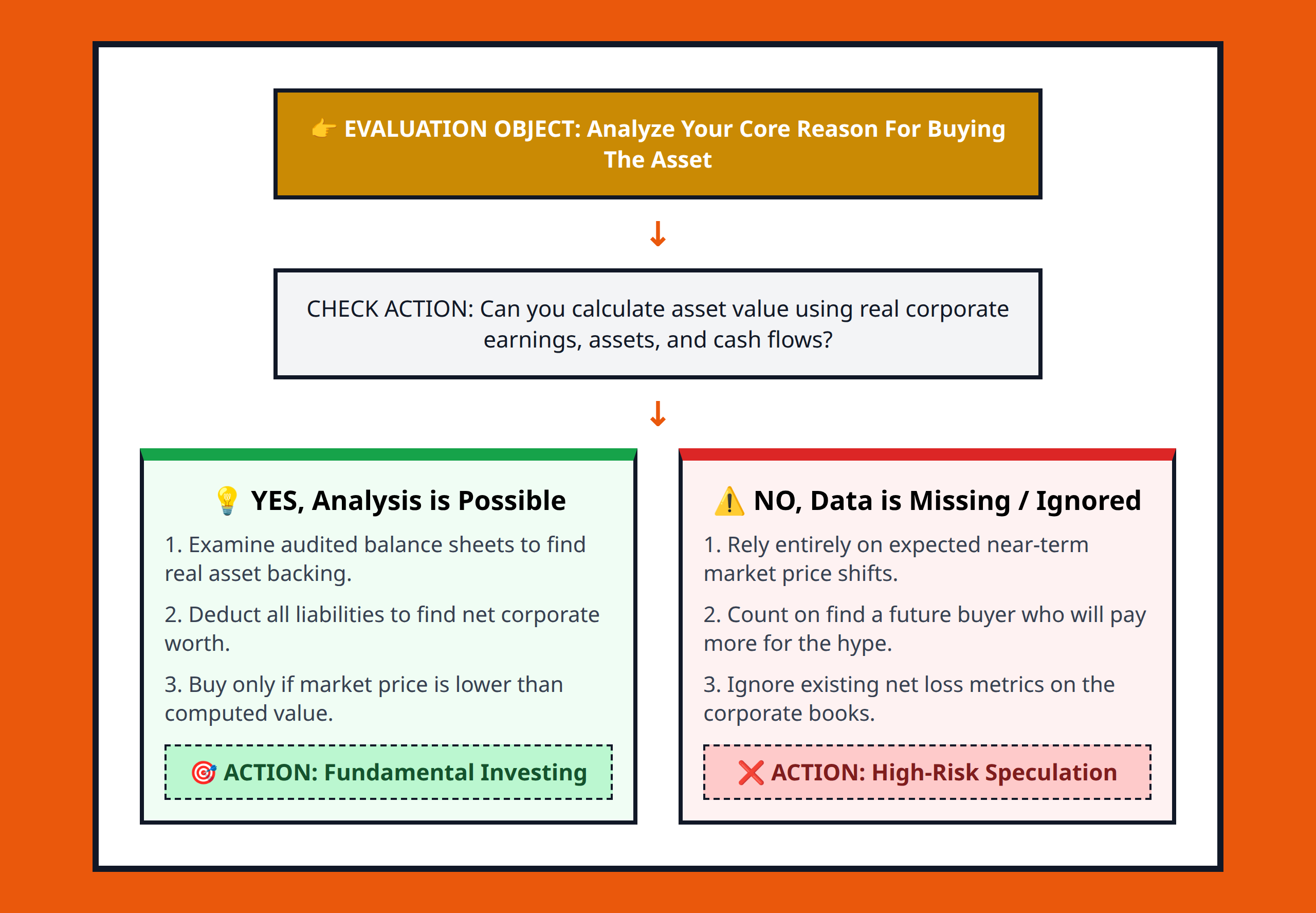
Fundamental investing starts from a different question entirely:
“What is this business actually worth over the long term?”
Instead of focusing primarily on short-term price movement, fundamental investors focus on:
- Business quality
- Cash generation
- Competitive advantages
- Industry structure
- Management decisions
- Financial durability
- Long-term earning power
A useful way to understand the difference is that speculators often study the stock first, while fundamental investors study the business first.
This distinction sounds simple, but it changes almost every part of the decision-making process.
| Speculation | Fundamental Investing |
|---|---|
| Focuses heavily on price movement | Focuses heavily on business value |
| Shorter-term orientation | Longer-term orientation |
| Driven by psychology and sentiment | Driven by business analysis |
| Relies heavily on timing | Relies heavily on valuation and durability |
| Often reacts to momentum | Often evaluates fundamentals independently of momentum |
| Can ignore intrinsic value | Treats intrinsic value as central |
Why Rising Markets Hide the Difference
One reason retail investors confuse speculation with investing is that bull markets temporarily reward both approaches.
During euphoric periods:
- Weak companies can rise alongside strong companies
- Momentum can outperform disciplined valuation
- Speculative narratives can dominate fundamentals
- Risk appears smaller than it really is
This environment creates psychological distortion because rising prices make many strategies appear intelligent simultaneously.
I would avoid assuming profits automatically validate the quality of a decision process. Markets can temporarily reward weak reasoning, especially during highly speculative phases.
A practical example is when investors buy companies primarily because “the chart looks unstoppable” or because online excitement keeps accelerating. The purchase may still generate profits temporarily, but the analytical foundation often remains fragile.
How Fundamental Investors Think About Risk Differently
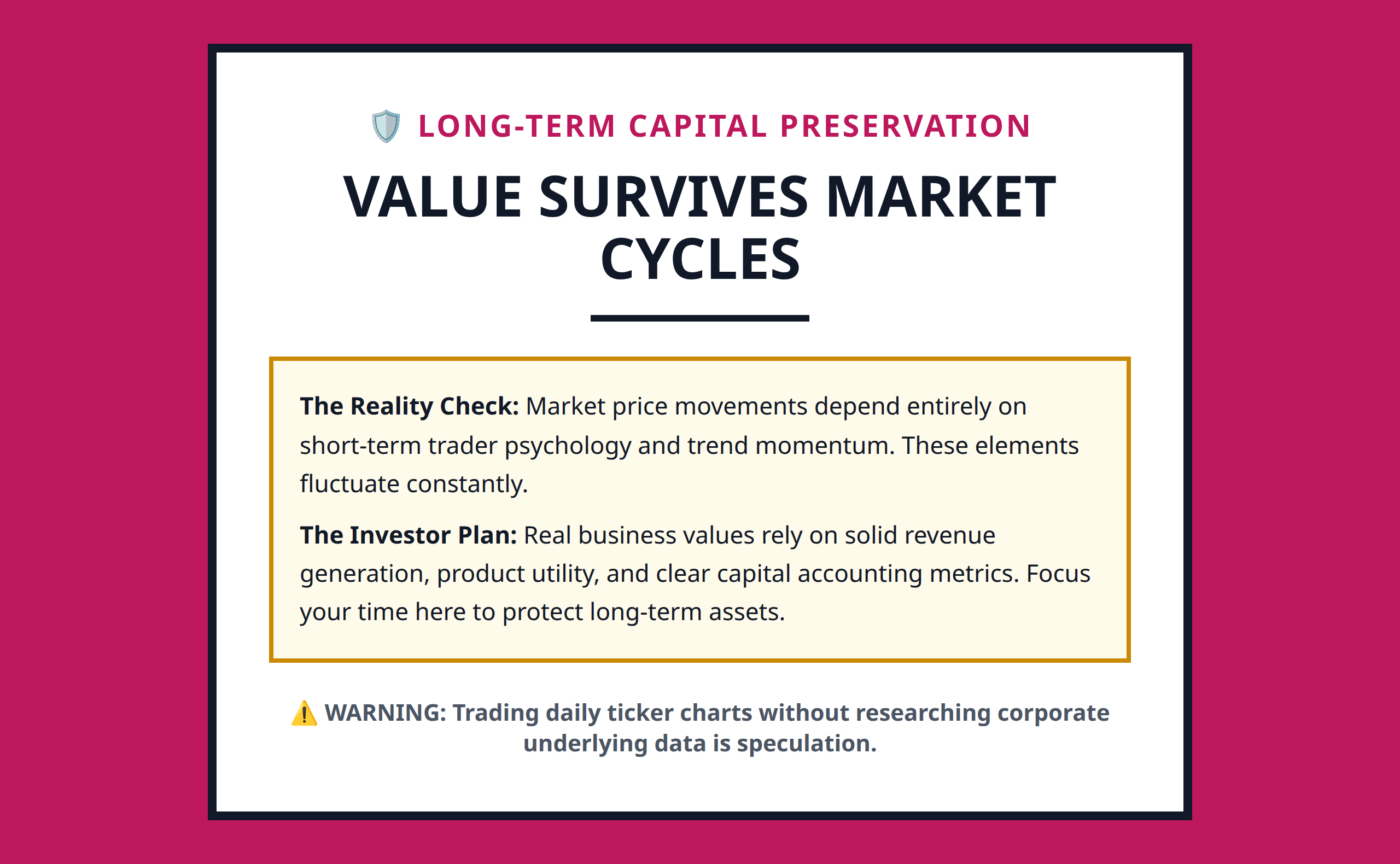
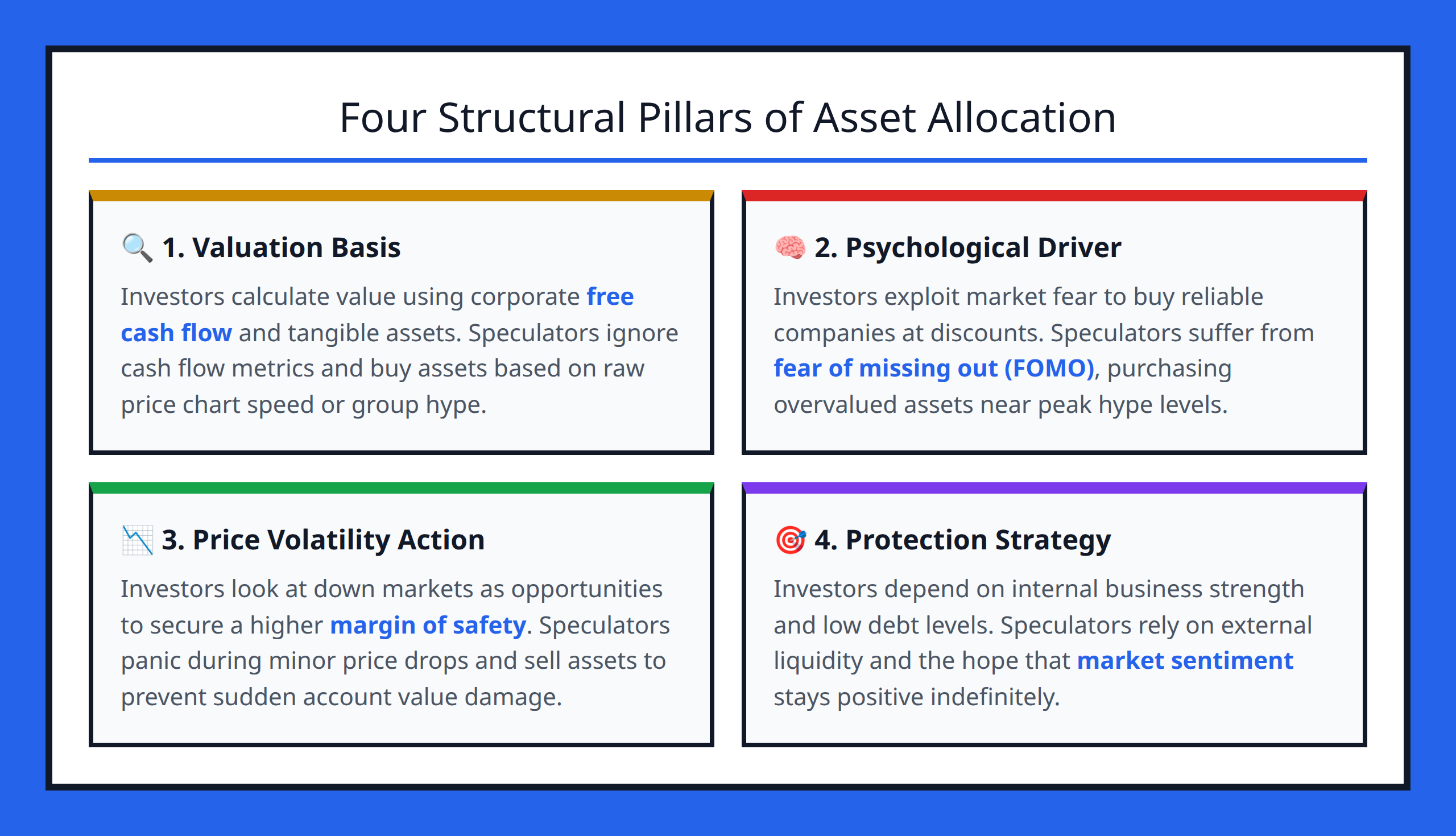
Speculators and fundamental investors usually define risk very differently.
Speculative risk is often tied to price volatility and timing failure. Fundamental investing, however, tends to define risk more structurally.
Fundamental investors usually ask:
- Could the business deteriorate permanently?
- Is debt becoming dangerous?
- Are competitive advantages weakening?
- Is the valuation disconnected from realistic assumptions?
- Can this company survive difficult market environments?
This creates a major behavioral difference during volatility.
For example, a speculator may panic primarily because price momentum weakens. A fundamental investor may remain calm if the underlying business assumptions still appear intact.
That does not mean fundamental investors ignore market declines. The difference is that they attempt to evaluate whether the decline reflects temporary emotional volatility or genuine business deterioration.
Why Time Horizon Changes the Entire Framework
Time horizon is one of the clearest dividing lines between speculation and fundamental investing.
Speculation often depends on short-term market reactions. Fundamental investing usually depends on long-term business execution.
This changes what matters operationally.
| Short-Term Speculative Focus | Long-Term Fundamental Focus |
|---|---|
| Daily or weekly price action | Multi-year business performance |
| Momentum acceleration | Sustainable earnings growth |
| Trader positioning | Competitive durability |
| Narrative excitement | Cash-flow generation |
| Entry and exit timing | Capital preservation and compounding |
I think this is where many retail investors accidentally drift into speculation without recognizing it. They may initially claim to be long-term investors, but their emotional reactions are still driven almost entirely by short-term price movement.
Why Famous Fundamental Investors Focused on Business Quality
Many well-known long-term investors built their frameworks around understanding businesses rather than predicting market excitement.
Their methods typically emphasized:
- Durable competitive advantages
- Strong management quality
- Predictable business economics
- Reasonable valuations
- Long-term compounding potential
The important lesson is not to imitate famous investors mechanically. The more useful observation is that enduring investment approaches usually rely less on emotional forecasting and more on disciplined business evaluation.
A practical example is how experienced fundamental investors often avoid industries they cannot understand clearly. They may willingly ignore fashionable trends if the underlying economics remain difficult to evaluate.
I find this especially important because speculative markets often pressure investors to abandon discipline precisely when caution matters most.
How Retail Investors Accidentally Become Speculators
Many retail investors do not intentionally choose speculation. The shift often happens gradually.
For example:
- An investor buys after seeing rapid gains
- Short-term profits reinforce confidence
- Research standards weaken
- Price movement becomes the primary decision signal
- Risk awareness declines during continued success
Eventually, the investor begins depending more on market behavior than business understanding.
The mistake I would avoid here is assuming speculation always looks reckless or emotional. Sometimes it appears highly rational during strong momentum cycles because recent market behavior creates psychological confirmation.
A Simple Diagnostic Test for Investors
One practical way to distinguish speculation from fundamental investing is to ask a few direct questions before buying a stock.
| Diagnostic Question | What It Reveals |
|---|---|
| Do I understand how this business makes money? | Business understanding |
| Am I buying because the stock already went up? | Momentum dependence |
| Could I explain the company’s competitive strengths? | Fundamental conviction |
| Would I still buy if the stock stopped moving for a year? | Time-horizon discipline |
| Am I reacting to excitement or evaluating value? | Psychological awareness |
This kind of self-evaluation is useful because speculative behavior often hides behind investment language.
Why Fundamental Investing Tends to Survive Market Cycles Better
Speculative strategies can perform extremely well during favorable environments, especially when liquidity is abundant and optimism dominates markets. But speculative systems also tend to become fragile when sentiment changes suddenly.
Fundamental investing attempts to create more durable decision-making because it anchors analysis to business economics rather than emotional momentum alone.
That does not eliminate mistakes, losses, or uncertainty. Strong businesses can still decline temporarily, and fundamental investors can still misjudge companies or industries. But the framework itself is usually designed around long-term survival, capital preservation, and disciplined reasoning.
Markets will probably always contain both speculation and investing because human psychology naturally creates excitement, fear, momentum, and narrative-driven behavior. The important distinction is understanding which framework is actually guiding your decisions before volatility exposes the difference.
References:
- https://www.investopedia.com/ask/answers/09/difference-between-investing-speculating.asp
- https://endowus.com/en-hk/insights/investing-vs-speculating
- https://sg.finance.yahoo.com/news/warren-buffett-difference-between-investing-020014691.html
- https://www.sofi.com/learn/content/speculation-vs-investing/
- https://site.financialmodelingprep.com/education/other/investing-vs-speculating-a-critical-comparison-for-financial-decision-making
- https://www.pyawaltman.com/blog/reflections-on-investing-versus-speculating
- https://www.linkedin.com/pulse/speculation-versus-investing-rachel-rasmussen-cfa
- https://fondexx.pro/blog/investor-vs-speculator
- https://www.reddit.com/r/ValueInvesting/comments/1rpzlop/investing_vs_speculation/
- https://www.reddit.com/r/explainlikeimfive/comments/7eh2mu/eli5what_is_the_key_difference_between/
- https://www.reddit.com/r/Bogleheads/comments/lfdc19/dangers_of_speculation_importance_of_being/
- https://www.bajajfinserv.in/investments/investing-vs-speculating
- https://www.slideshare.net/slideshow/speculators-meaning-types-speculative-transactions-advantages-and-limitations/134935400
- https://finred.usalearning.gov/saving/StocksBondsMutualFunds
