Before buying a stock, understanding whether a business can outperform competitors over the long term is crucial. Not all popular companies have durable advantages, and distinguishing structural strength from short-term hype can make the difference in long-term investment performance.
Understanding Market Structures and Positioning
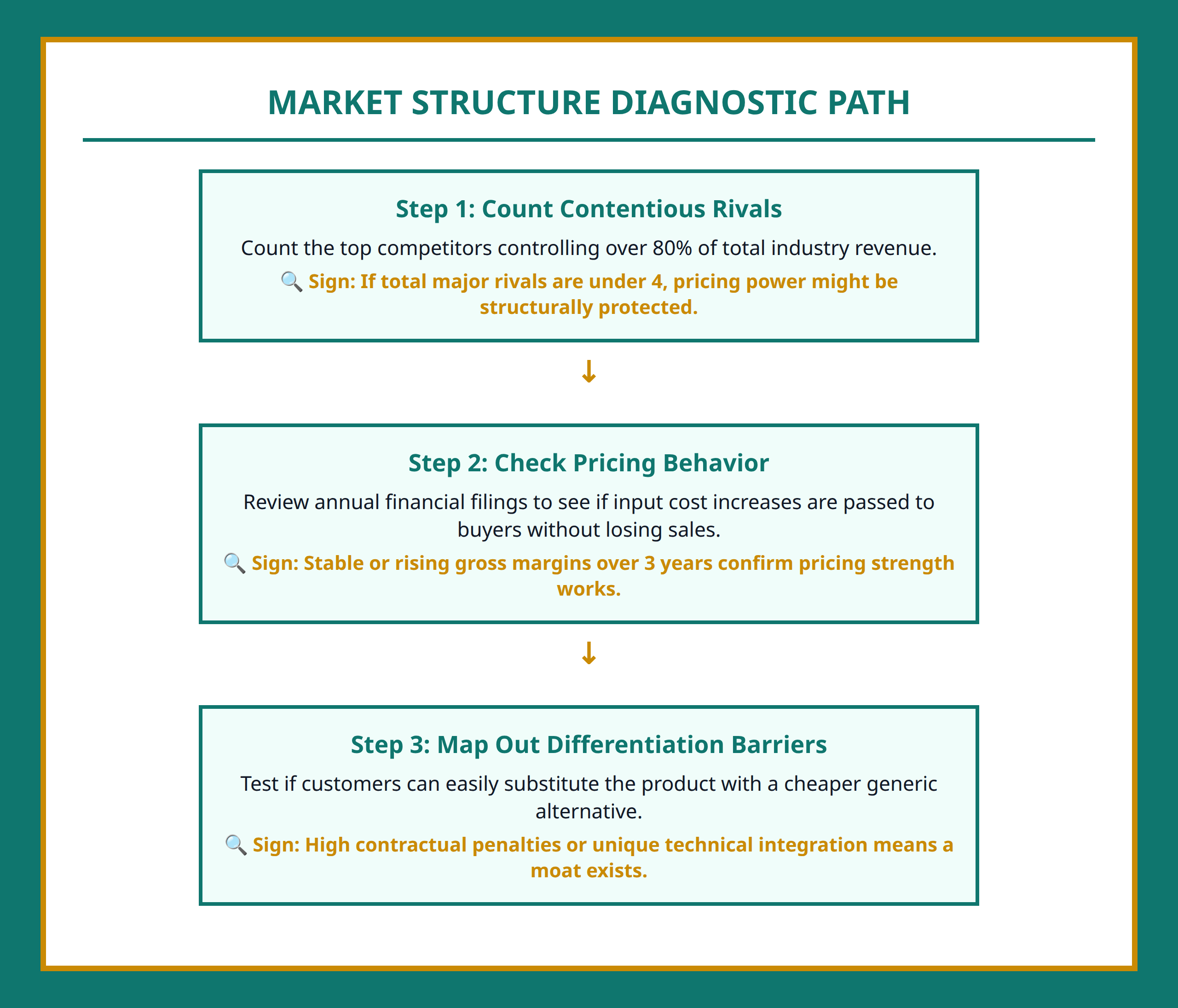
Companies operate within broader market structures, which influence how competitive pressures shape their profitability. Identifying a firm’s position in its industry helps investors assess whether its performance is repeatable. For example, businesses operating in fragmented markets with low barriers to entry often face persistent pricing pressure, making long-term profits less predictable. In contrast, firms in industries with structural protections—such as limited suppliers, high switching costs, or specialized knowledge—can maintain superior performance over time.
Identifying Durable Moats
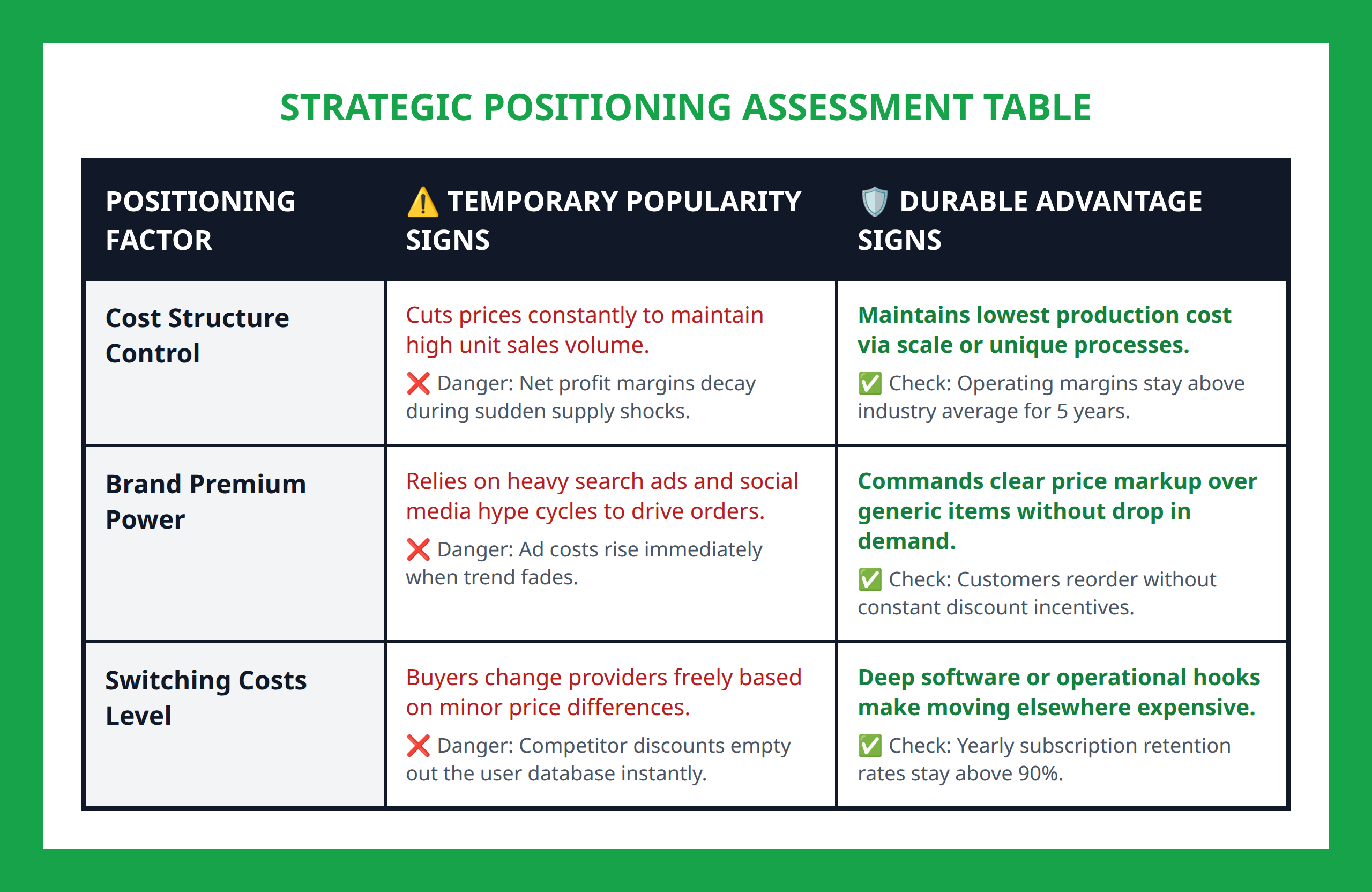
A real competitive advantage, often referred to as an economic moat, protects a company from competitors and market volatility. Moats can take various forms, including brand recognition, network effects, scale economies, or customer loyalty. To identify a moat, ask whether a competitor could realistically replicate the company’s advantage without incurring disproportionate costs or risks. For instance, a software platform with a large user base may benefit from network effects, making it challenging for new entrants to achieve the same value proposition.
Benchmarking Against Competitors
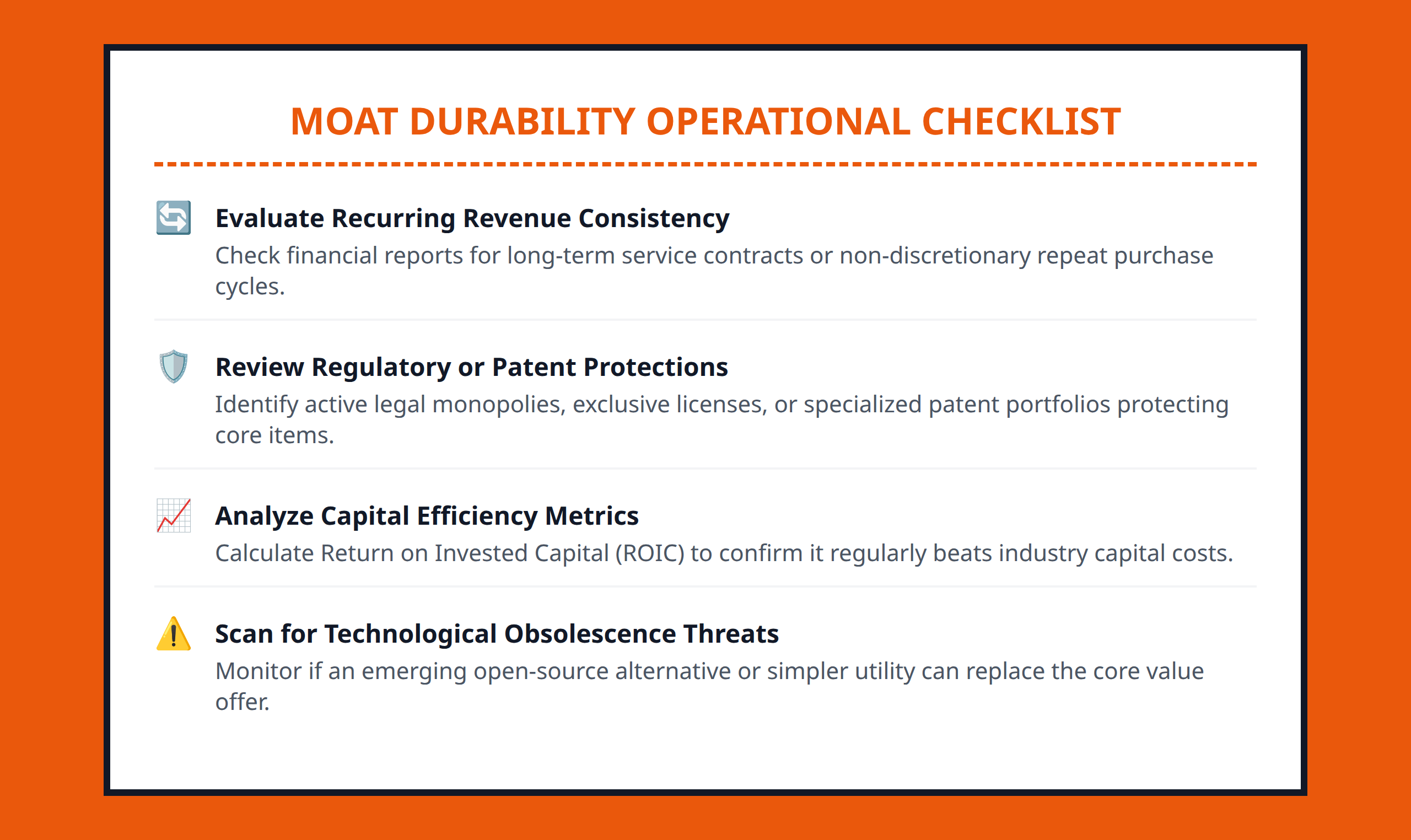
Comparing a company with its peers provides critical insight into the durability of its competitive positioning. Look for metrics that indicate consistent operational efficiency, profit margins above industry averages, or higher customer retention rates. A company that consistently outperforms similar firms likely has structural advantages rather than temporary popularity. In contrast, a firm performing only when market sentiment is favorable may lack a true moat.
Assessing Business-Model Durability
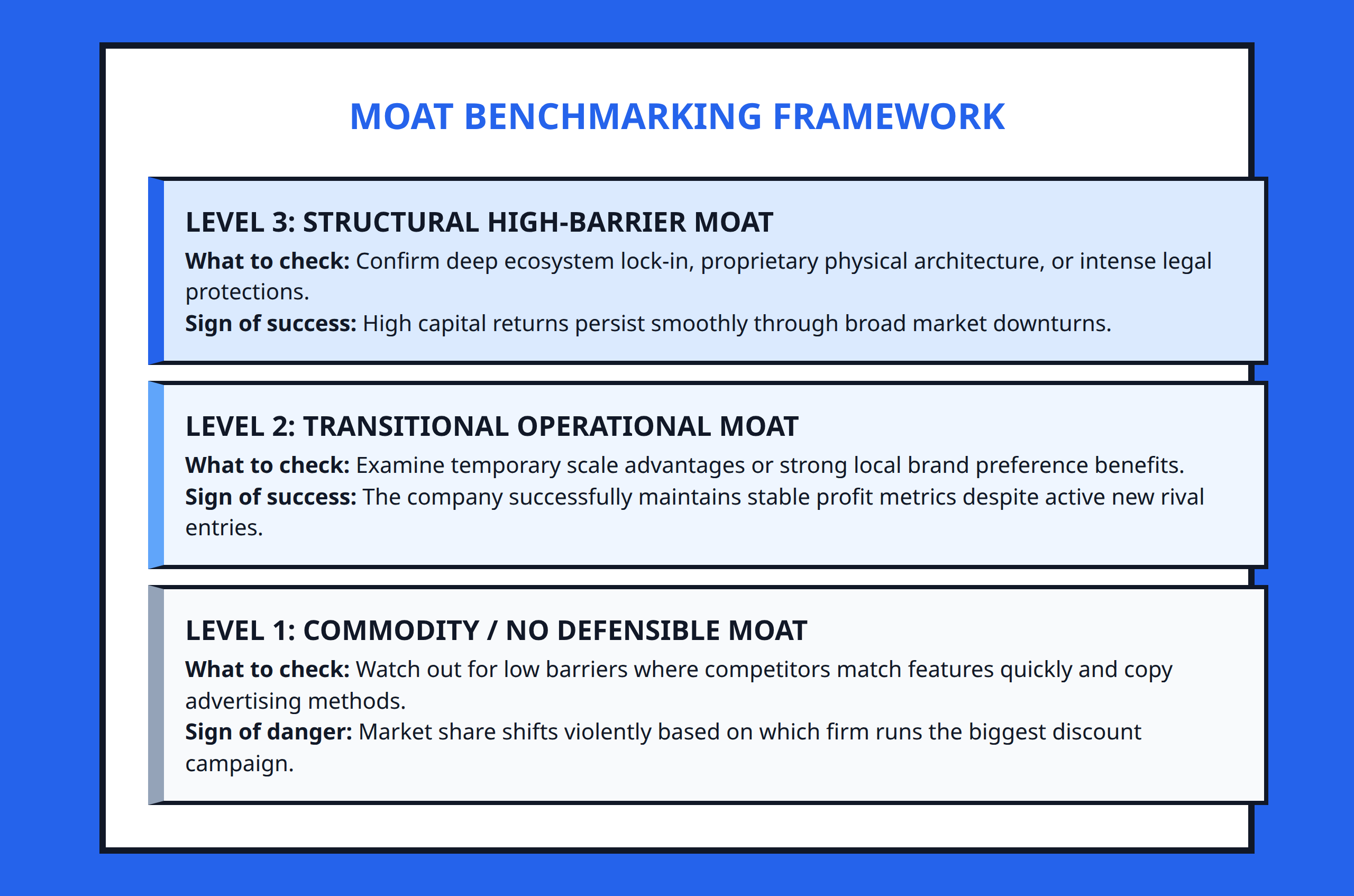
Durability extends beyond current profitability—it evaluates whether the business model can sustain its advantages under changing market conditions. Analyze how revenue streams, cost structures, and customer relationships adapt during economic shifts. Durable models typically have recurring revenue, predictable demand, and flexible operations. For example, subscription-based services often maintain steady cash flow, giving them resilience against cyclical downturns.
Translating Competitive Strength into Long-Term Value
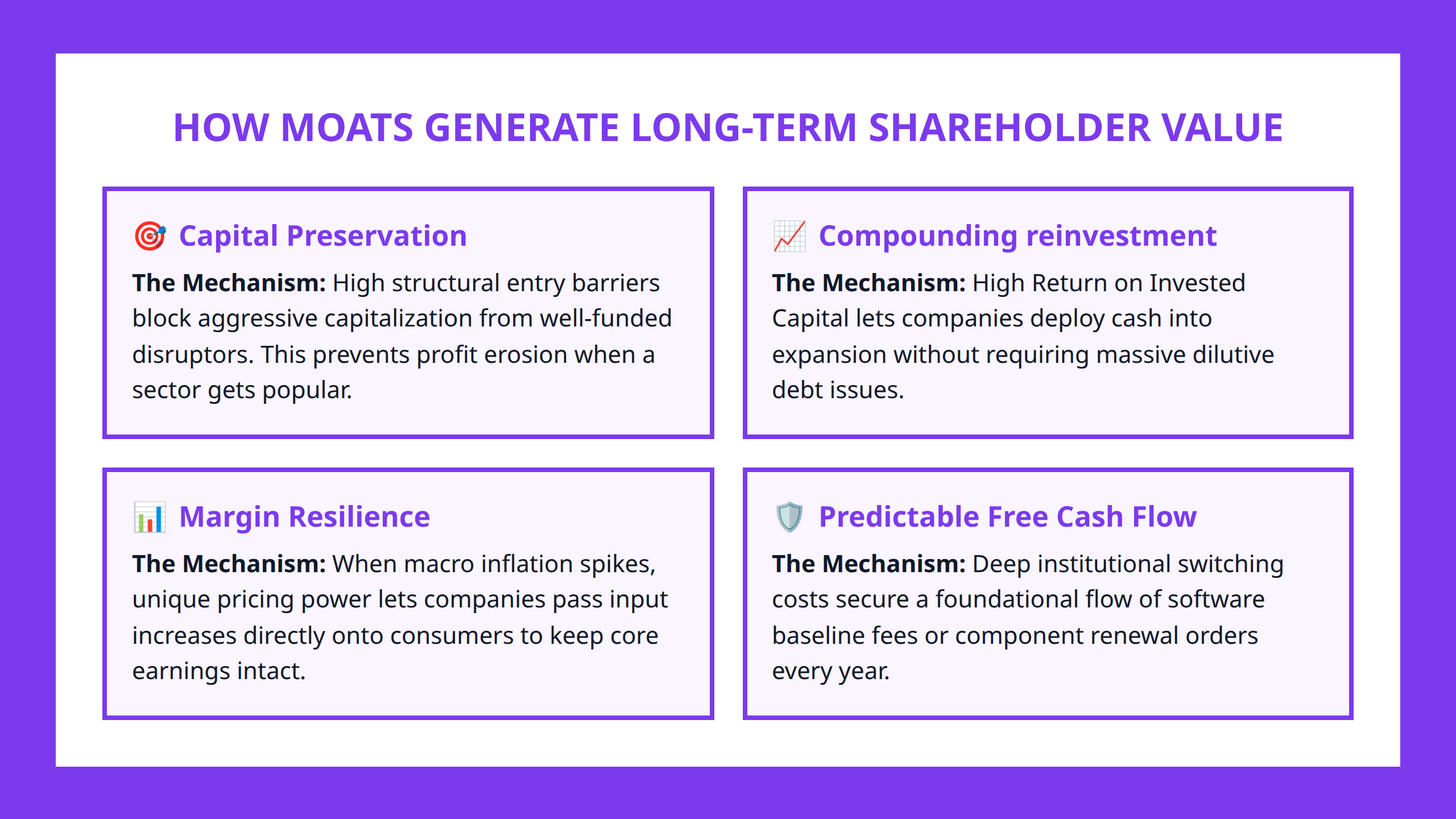
Understanding competitive advantage is not just about identifying strong businesses; it is about anticipating their ability to compound shareholder value over time. Companies with durable advantages can reinvest profits effectively, withstand competitive threats, and maintain superior margins. Evaluating these characteristics before purchasing shares ensures that your investment thesis is grounded in structural strength rather than short-lived trends.
Practical Takeaway for Investors
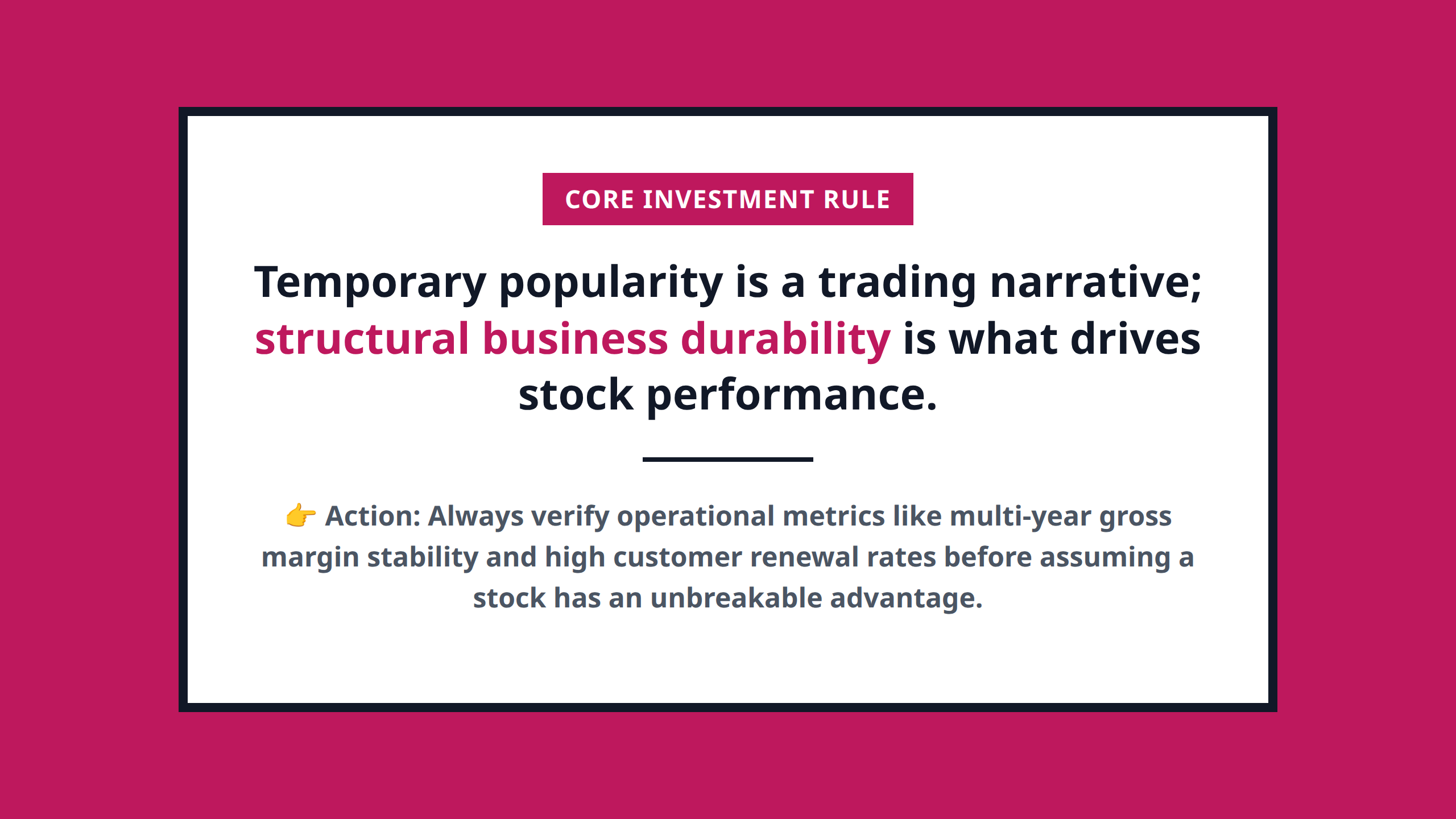
To apply this analysis:
- Examine the company’s market structure and positioning within its industry.
- Identify moats by evaluating whether advantages are costly or difficult for competitors to replicate.
- Benchmark performance against peers to detect structural outperformance.
- Analyze business-model durability under different economic scenarios.
- Connect competitive strength to long-term shareholder value, not just current profits or popularity.
By following this framework, investors can distinguish companies with lasting competitive advantages from those buoyed only by short-term market enthusiasm, supporting smarter long-term investment decisions.
References:
- https://www.schwab.com/learn/story/how-to-pick-stocks-using-fundamental-and-technical-analysis
- https://www.home.saxo/en-sg/learn/guides/trading-strategies/how-to-pick-stocks
- https://www.reddit.com/r/ValueInvesting/comments/1r1q38z/beginner_seeking_advice_how_do_you_analyze_stocks/
- https://www.reddit.com/r/ValueInvesting/comments/1r1q38z/beginner_seeking_advice_how_do_you_analyze_stocks/o4rhntc/
- https://www.reddit.com/r/ValueInvesting/comments/1r1q38z/beginner_seeking_advice_how_do_you_analyze_stocks/o4rkog9/
- https://www.reddit.com/r/ValueInvesting/comments/1g6jty5/how_do_you_figure_out_if_a_company_has_a_real/
- https://www.quora.com/How-do-you-identify-genuine-growth-opportunities-in-the-stock-market-without-being-swayed-by-hype
- https://www.investopedia.com/articles/basics/11/how-to-pick-a-stock.asp
- https://www.stockopedia.com/academy/articles/how-to-identify-stocks-with-a-competitive-advantage/
- https://www.heygotrade.com/en/blog/competitive-moat-investing-evaluate-company/
- https://www.dbs.com.sg/treasures/articles/wealth-feed/ways-to-spot-an-undervalued-stock
- https://www.ruleoneinvesting.com/blog/podcast/finding-a-businesss-competitive-moat/
- https://www.askatlantis.com/blog/how-to-analyze-competitive-advantages
- https://www.finra.org/investors/investing/investment-products/stocks/evaluating-stocks
- https://www.reddit.com/r/ValueInvesting/comments/1r1q38z/beginner_seeking_advice_how_do_you_analyze_stocks/o4rnq3h/
- https://www.reddit.com/r/ValueInvesting/comments/1g6jty5/how_do_you_figure_out_if_a_company_has_a_real/lsjfl67/
- https://www.reddit.com/r/ValueInvesting/comments/1g6jty5/how_do_you_figure_out_if_a_company_has_a_real/lsknjzd/
- https://www.reddit.com/r/ValueInvesting/comments/1g6jty5/how_do_you_figure_out_if_a_company_has_a_real/lsjfphx/
